 English
  Español
  français
  العربية
 Search
Search
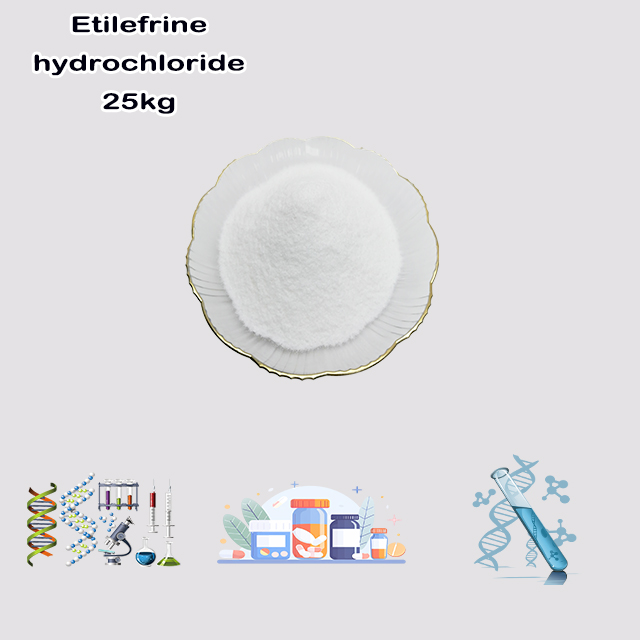
The role of etilefrine hydrochloride is to strengthen myocardial contractility, constrict blood vessels, raise blood pressure; it is mainly used in the treatment of hypotension.
| ITEMS | SPECIFICATIONS | RESULTS |
| Appearance | White or almost white crystalline powder | White crystalline powder |
| Acidity or Alkalinity | Complies | Complies |
| Sulphates | ≤200ppm | Complies |
| Heavy metals | ≤20ppm | Complies |
| Loss on drying | ≤0.5% | 0.06% |
| Sulphated Ash | ≤0.1% | 0.04% |
| Assay | 98.0-101.0% | 100.5% |
| Product parameters | |
| Cas number: | 943-17-9 |
| Appearance: | White or almost white crystalline powder |
| Purity: | 98~101% |
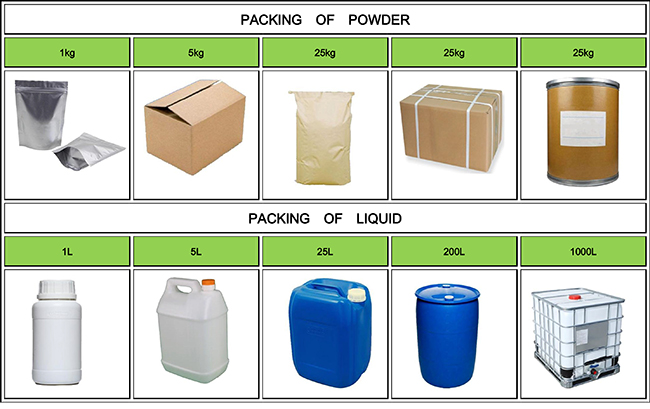
| Package details: | 1kg/foil bag |
| Brand: | Fortunachem |
Etilefrine hydrochloride is the salt form of Etilefrine, a synthetic sympathomimetic amine. This means it mimics the effects of the neurotransmitters norepinephrine and epinephrine (adrenaline) in the body.
Chemical Name: (±)-erythro-1-(3-Hydroxyphenyl)-2-ethylaminoethanol hydrochloride
Molecular Formula: C₁₀H₁₅NO₂·HCl
Mode of Action: It primarily acts as an α1-adrenergic receptor agonist. Stimulating these receptors causes vasoconstriction (tightening of blood vessels), which leads to an increase in blood pressure and improved venous return to the heart.
In a medical/pharmaceutical context, etilefrine hydrochloride is used as a vasopressor or antihypotensive agent. Its main therapeutic applications are:
Treatment of Hypotension: Especially orthostatic hypotension (a sudden fall in blood pressure when standing up).
Management of Low Blood Pressure: Associated with conditions like varicose veins or during surgical procedures.
Adjunct Therapy: In some countries, it's used in combination with other agents for conditions like vertigo or Meniere's disease.
Important Note: Its medical use has declined or become regional (more common in some Asian and European countries) as newer agents with more specific profiles have been developed.
The term "chemical grade" (also called reagent grade, laboratory grade, or reference standard grade) indicates that the substance is intended for non-pharmaceutical, scientific use. It is not packaged or certified for human or veterinary consumption.
For Etilefrine hydrochloride, this grade is used exclusively in research and analytical laboratories. Key applications include:
Purpose: To serve as a benchmark for identity, purity, and quantity.
Uses:
Pharmaceutical Quality Control (QC): Used in labs to test the potency and purity of commercial pharmaceutical batches (tablets, injections) containing etilefrine. The chemical-grade material is the known "standard" against which the product is compared using techniques like HPLC (High-Performance Liquid Chromatography) or UV-Vis spectroscopy.
Forensic Analysis: Used as a reference standard to identify and quantify etilefrine in biological samples (blood, urine) or in unknown seized materials.
Method Development and Validation: When a lab develops a new analytical procedure to detect etilefrine, the pure chemical-grade compound is essential for calibrating instruments and validating the method's accuracy.
Purpose: To study its mechanism of action and effects at a molecular and cellular level.
Uses:
Receptor Binding Studies: Used in experiments to characterize α-adrenergic receptors—how drugs bind to them, activate them, or block them.
Cell & Tissue Studies: Applied to isolated tissues (e.g., aortic rings) or cell cultures to study vascular contraction, signal transduction pathways, and cellular responses.
Comparative Studies: Used as a known agonist to compare the potency and efficacy of new experimental vasoactive compounds.
Purpose: To serve as a starting material or precursor for the synthesis of other, more complex chemical compounds.
Uses: While not its most common use, researchers in medicinal chemistry might modify the etilefrine molecule to create novel derivatives and study their structure-activity relationships (SAR).
| Feature | Chemical / Reagent Grade | Pharmaceutical Grade |
|---|---|---|
| Primary Use | Laboratory analysis & research | Human/veterinary medicine |
| Certification | Certificate of Analysis (CoA) with purity (e.g., ≥98% by HPLC). | Strict pharmacopoeial standards (USP, Ph. Eur., JP). |
| Purity | High, but focused on chemical impurity profile. | Extremely high, with strict limits on specific, defined impurities and heavy metals. |
| Excipients | None (pure compound). | Contains fillers, binders, etc., in final dosage form. |
| Packaging | Plain container (vial, bottle). May be light-protected. | Pharmaceutical blister packs, vials with medical labels. |
| Regulatory Path | Not for drug use; follows lab chemical regulations. | Requires extensive clinical trials and regulatory approval (FDA, EMA, etc.). |
Etilefrine hydrochloride is a synthetic drug that raises blood pressure by stimulating alpha-adrenergic receptors.
In its chemical grade form, it is not used as a medicine.
Its sole purposes are:
As an Analytical Standard for quality control and forensic testing.
As a Research Tool in pharmacological and biochemical experiments to study cardiovascular systems and receptor biology.
As a Potential Chemical Intermediate for synthesis.
When sourcing "chemical grade" etilefrine hydrochloride, it is typically purchased from suppliers of fine chemicals and reference standards (e.g., Sigma-Aldrich, TCI, LGC Standards, USP) and must be handled with appropriate laboratory safety precautions.


Fortunachem Provides Not Only Professional Chemical Products But Also Professional Help
Keeping you up-to-date with all the latest information, news, and events about Fortunachem!



Quick Links
Add:
E-mail:
 中文
中文