
 English
  Español
  français
  العربية
 Search
Search
Fucoidan (CAS 9072-19-9) — Summary
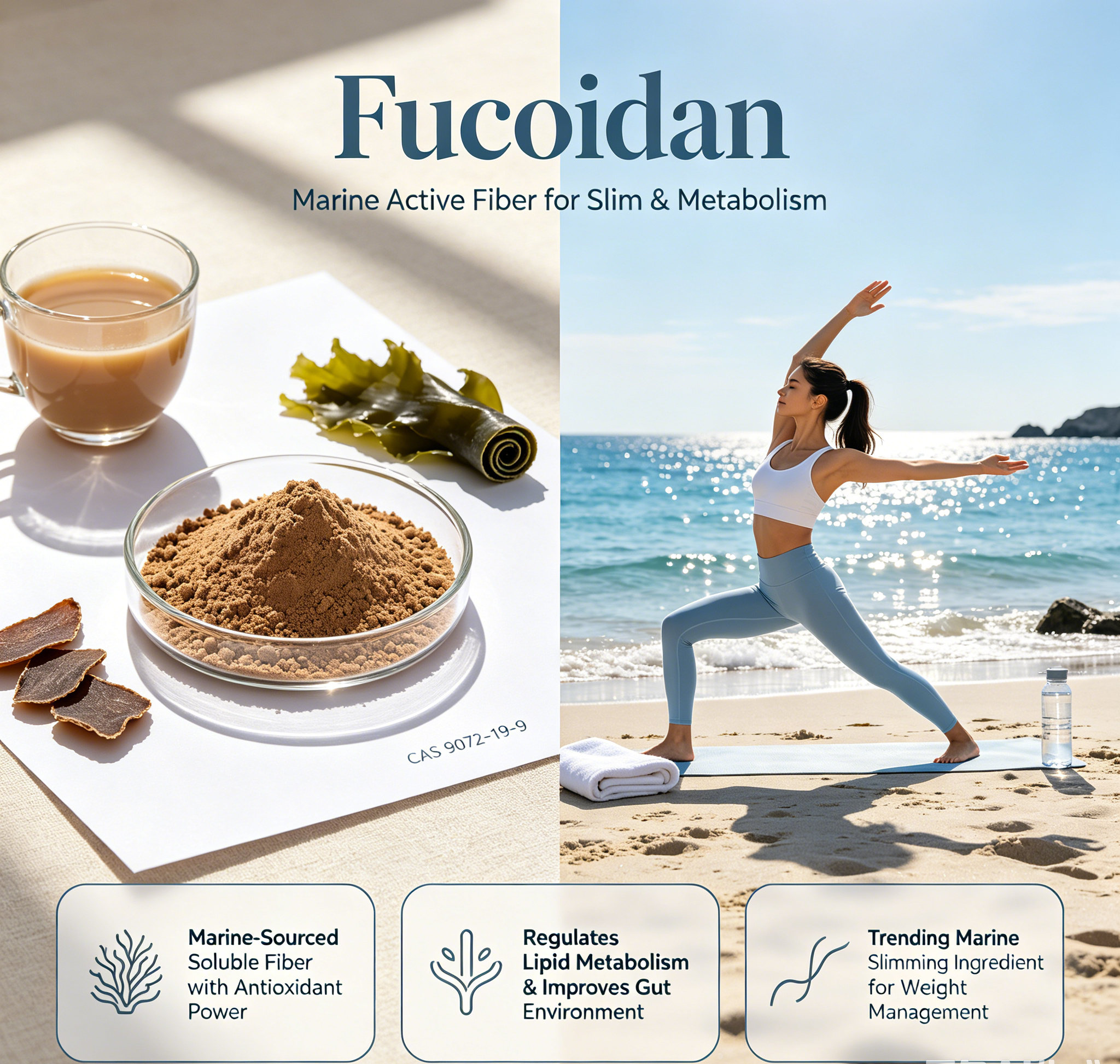
Fucoidan is a sulfated polysaccharide derived from marine brown algae such as wakame, kombu, and bladderwrack. As a bioactive marine dietary fiber, it modulates lipid metabolism by activating the AMPK pathway — inhibiting lipogenesis via downregulation of PPAR-γ and SREBP-1C while promoting fatty acid β-oxidation. Animal studies show it enhances exercise endurance by 25% and increases muscle mass through mitochondrial biogenesis upregulation.
Fucoidan acts as a prebiotic, promoting beneficial gut bacteria including Akkermansia muciniphila and Bifidobacteria, while reducing the Firmicutes/Bacteroidetes ratio. Its antioxidant and anti-inflammatory properties mitigate exercise-induced oxidative stress and support post-training recovery.
As the core ingredient of the emerging "Marine Slimming" concept, fucoidan offers a gentle, non-stimulant, multi-target approach to weight management — distinguishing it from terrestrial fibers and synthetic fat burners — making it a highly differentiated ingredient in global functional food and sports nutrition markets.
Specifications of Fucoidan CAS 9072-19-9 COA:
Items | Specifications | Results |
Appearance(25℃) | White(Light yellow) Powder | Conformed |
Taste and Odor | characteristic | characteristic |
Mesh Size | 100% through 80 Mesh | Conformed |
Water Solubility | Soluble | Conformed |
Fucoidan | ≥95% | |
Organic SO42- | ≥15% | 20.06% |
Carbohydrate | ≥70% | 75.09% |
L-Fucose | ≥15% | 25.02% |
Heavy Metal | ≤10ppm | Conformed |
Lead | ≤3ppm | Conformed |
Cadmium | ≤1ppm | Conformed |
Mercury | ≤0.1ppm | Conformed |
Arsenic | ≤2ppm | Conformed |
Loss on Dry | ≤5.0% | 4.86% |
Ash | ≤5.0% | 3.75% |
Total Plate Count | <1000 cfu/g | Conformed |
Yeast and Mould | <100 cfu/g | Conformed |
E.coli CFU/g | Absent | Conformed |
Salmonella species | Absent | Conformed |
Staphylococcus aurreus | Absent | Conformed |
Conclusion | The product conforms to the above specifications. | |

CAS:9072-19-9
MF:C7H14O7S
Melting point :>179°C(dec.)
form:powder
color:White(Light yellow)
Uses:
Fucoidan (CAS 9072-19-9) — A Comprehensive Overview
I. What Is Fucoidan?
Fucoidan (CAS No. 9072-19-9), also known as fucoidan sulfate, brown algae polysaccharide, or sulfated fucan, is a class of sulfated polysaccharides naturally found in marine brown algae. Its molecular backbone is built on L-fucose as the core structural unit, linked through α(1→3) and/or α(1→3)/α(1→4) glycosidic bonds, and decorated with abundant sulfate groups. It also contains minor amounts of uronic acid, galactose, xylose, and other monosaccharide components.
Fucoidan is widely distributed across multiple edible brown algae species, with primary sources including:
Wakame (Undaria pinnatifida)
Kombu (Laminaria japonica)
Bladderwrack (Fucus vesiculosus)
Sargassum (Sargassum spp.)
Mozuku (Cladosiphon okamuranus — Okinawa mozuku, with fucoidan content as high as 2,500–3,000 mg/100 g dry weight)
Fucoidan resides in the cell walls and intercellular tissues of brown algae, where it serves a protective function against environmental stressors. Its molecular weight typically ranges from 50 to 1,000 kDa with polydisperse distribution, and its sulfate group content is approximately 10%–30% (w/w) — structural parameters that directly determine the potency of its biological activities.
Key Physicochemical Properties
| Parameter | Specification |
|---|---|
| Appearance | Light brown to brownish-yellow powder |
| Solubility | Water-soluble; forms viscous solutions |
| Molecular weight | 50–1,000 kDa (varies by source and extraction method) |
| Sulfate content | ~10%–30% (w/w) |
| Fucose content | Up to 50%–90% (mol) after purification |
| Charge property | Strongly anionic (due to sulfate groups) |
| Safety | Recognized as GRAS (Generally Recognized as Safe) by the U.S. FDA |
Fucoidan was first isolated and described from seaweed mucilage in 1913 by Swedish professor Harald Kylin. It has since been progressively identified as a class of marine sulfated polysaccharides with broad-spectrum biological activities. As of early 2026, more than 2,300 peer-reviewed scientific publications have reported its anti-tumor, antiviral, anti-inflammatory, immunomodulatory, anticoagulant, and other biological properties.
II. Roles in Sports Health and Fitness/Body Shaping
1. Lipid Metabolism Regulation — Activating the AMPK Pathway to Inhibit Lipogenesis
Fucoidan demonstrates significant pharmacological activity in lipid metabolism regulation. Research teams at the Ocean University of China discovered that fucoidan derived from bladderwrack (Fucus vesiculosus) (FvF) can comprehensively regulate lipid metabolism by activating the AMPK (AMP-activated protein kinase) signaling pathway:
Phosphorylation of HMG-CoA reductase (HMGCR): Inhibits cholesterol biosynthesis;
Phosphorylation of acetyl-CoA carboxylase (ACC): Suppresses fatty acid synthesis and promotes fatty acid β-oxidation;
Reduction of the mature/precurson ratio of SREBP-1C: Decreases triglyceride (TG) accumulation.
In vitro experiments showed that FvF treatment reduced TG content in insulin-resistant HepG2 cells by approximately 30%, with significant decreases in intracellular lipid droplet accumulation.
In vivo experiments demonstrated that in high-fat diet-induced metabolic syndrome mice supplemented with FvF, serum TG, total cholesterol (TC), and low-density lipoprotein cholesterol (LDL-C) all decreased significantly, while high-density lipoprotein cholesterol (HDL-C) increased markedly, and hepatic steatosis improved substantially.
Additionally, fucoidan derived from Sargassum thunbergii has been confirmed to significantly downregulate the expression of key adipogenic transcription factors — PPAR-γ and SREBP-1 — in white adipose tissue, effectively controlling high-fat diet-induced weight gain and fat mass increase.
For fitness and body-shaping populations, this means fucoidan can simultaneously target the lipid metabolism network from multiple nodes — both inhibiting fat synthesis and promoting fat oxidative breakdown — making it a powerful adjunct for body fat management.
2. Enhancing Exercise Performance — Promoting Mitochondrial Biogenesis and Muscle Function
A 2024 animal study revealed the direct value of fucoidan in the exercise domain. C57BL/6J mice supplemented daily with 400 mg/kg of fucoidan derived from wakame (Undaria pinnatifida) for 10 weeks showed:
25.5% increase in daily running distance;
10.4% increase in muscle mass;
Significant upregulation of mRNA expression of genes related to mitochondrial biogenesis and oxidative capacity in skeletal muscle (COX4, MYH1, PGC-1α, PPAR-γ, IGF1).
These results indicate that fucoidan can enhance mitochondrial function and oxidative metabolic capacity in muscle, thereby improving exercise endurance and muscular strength.
3. Immunomodulation — Protecting the Mucosal Immune Barrier After High-Intensity Training
High-intensity training leads to suppressed mucosal immune function in athletes, manifesting as changes in salivary and intestinal immune markers such as IgA, lactoferrin, and lysozyme. A double-blind, placebo-controlled crossover trial in amateur male athletes showed that daily supplementation with 1 g of fucoidan (derived from wakame, purity >85%) for 3 weeks resulted in:
Approximately 2.7-fold increase in salivary IgA response to acute exercise (p = 0.02);
A trending reduction in the post-exercise elevation of salivary lysozyme (p = 0.08);
16%–19% improvement in mean power output during high-intensity training periods.
These findings indicate that fucoidan helps maintain mucosal immune function during periods of intense training, reducing infection risk associated with the "post-exercise immune dip" — offering practical protective benefits for regularly training athletic populations.
4. Antioxidant Activity — Mitigating Exercise-Induced Oxidative Stress
Fucoidan possesses well-documented antioxidant activity. In ferric reducing antioxidant power (FRAP) assays and DPPH radical scavenging experiments, its IC₅₀ values were 76.8 μg/mL and 93.69 μg/mL, respectively.
At the cellular level, fucoidan significantly reduces reactive oxygen species (ROS) levels in insulin-resistant HepG2 cells, repairing insulin signaling through the ROS-mediated JNK/Akt pathway.
For athletic populations, high-intensity training generates substantial free radicals, leading to oxidative stress and muscle damage. Fucoidan's antioxidant capacity helps neutralize these harmful radicals and accelerates post-exercise recovery.
III. Marine-Derived Bioactive Dietary Fiber — Gut Microbiota Modulation
Prebiotic Function
As a class of natural water-soluble dietary fiber, fucoidan reaches the large intestine where it can be fermented and utilized by gut microorganisms, exerting prebiotic functions. Research has demonstrated that fucoidan significantly promotes the proliferation of the following beneficial bacteria:
Bacteroides/Prevotella genera
Akkermansia muciniphila — a "star bacterium" closely associated with metabolic health
Lactobacillus genus
Simultaneously, fucoidan significantly reduces the Firmicutes/Bacteroidetes ratio — a widely recognized indicator of gut microbiome health, where a lower ratio is generally associated with a healthier metabolic phenotype.
Research from the Ocean University of China also confirmed that fucoidan derived from kombu increases the abundance of Akkermansia and Lactobacillus in the gut of high-fat diet-fed mice, thereby improving metabolic syndrome.
Intestinal Barrier Protection
Fucoidan's anti-inflammatory properties confer protective effects on the intestinal barrier. In vitro studies showed that fucoidan derived from bladderwrack inhibits LPS-induced expression of TNF-α and IL-1β in Caco-2 colonic epithelial cells while elevating IL-10 levels. In vivo experiments demonstrated that oral fucoidan administration reduces intestinal inflammatory markers (IL-1α, IL-1β, IL-10) and ameliorates acute colitis.
For fitness enthusiasts, particularly those on long-term high-protein diets that may disrupt gut microbial ecology, fucoidan as a prebiotic substrate helps maintain microbial diversity and intestinal barrier integrity.
IV. The Emerging "Marine Slimming" Concept — Distinctive Competitive Advantages
Market Positioning and Trends
In recent years, the overseas functional food and dietary supplement market has given rise to a compelling new concept — "Marine Slimming." The core logic of this concept is to leverage natural bioactive ingredients derived from the ocean to achieve healthy, gentle, and sustainable weight management and body shaping through multi-target, multi-pathway synergistic actions.
Fucoidan stands as the core representative ingredient in this concept, with its distinctive competitive advantages manifested in the following dimensions:
1. Unique Marine-Origin Story
Unlike terrestrial-source dietary fibers (such as inulin, resistant dextrin, and β-glucan), fucoidan originates from deep-sea brown algae, naturally carrying the brand narrative of a "marine superfood." Consumers inherently associate marine-sourced ingredients with "purity, naturalness, and scarcity," providing powerful differentiated storytelling for product marketing.
2. Multi-Target Synergistic Mechanism of Action
Traditional slimming ingredients typically rely on single mechanisms (e.g., appetite suppression alone or fat oxidation promotion alone), whereas fucoidan simultaneously acts on multiple critical nodes:
Inhibiting lipogenesis (downregulating PPAR-γ, SREBP-1C)
Promoting fat oxidation (activating AMPK → phosphorylating ACC, HMGCR)
Inhibiting glucose absorption (confirmed in both Caco-2 monolayer models and everted gut sac models)
Enhancing satiety (delaying gastric emptying, modulating ghrelin/leptin hormonal balance)
Improving gut microbiota (promoting Akkermansia and Bifidobacteria proliferation)
Antioxidant and anti-inflammatory effects (reducing ROS, inhibiting NF-κB pathway)
This "multi-target, full-chain" mode of action allows it to replace the compounding of multiple single-function ingredients in formulation design, simplifying formulation logic.
3. Gentle, Non-Stimulant Profile
Unlike "aggressive" fat-burning products containing stimulants such as caffeine or synephrine, fucoidan operates through a gentle, non-irritating mechanism. It does not suppress appetite or accelerate metabolism by stimulating the central nervous system; rather, it achieves gradual body composition improvement by modulating metabolic pathways and gut microbiota. This makes it especially suitable for stimulant-sensitive individuals or athletic populations who still need to manage body fat after evening training sessions.
4. Comprehensive Global Regulatory Credentials
United States: FDA-recognized as GRAS; fucoidan derived from wakame and bladderwrack may be used in dietary supplements
Japan: Fucoidan has deep consumer education foundations in the Japanese functional food market
China: In 2019, fucoidan was approved by the National Health Commission as an ordinary food ingredient, legally usable in functional foods
South Korea/Australia: Multiple companies (e.g., Marinova) have obtained commercial production permits for high-purity fucoidan
5. Natural Compounding Synergy with Other "Marine-System" Ingredients
In overseas lightweight slimming product lines, fucoidan frequently forms natural compounding combinations with other marine-derived functional ingredients:
Fucoidan + Fucoxanthin: The former regulates lipid metabolism pathways while the latter activates the UCP1 thermogenic pathway in white adipose tissue, forming a "synthesis inhibition + consumption promotion" bidirectional synergy. Products such as Solaray Kelp Capsules combine 1% fucoxanthin with 85% fucoidan, targeting weight management
Fucoidan + Fish Collagen Peptides: Fat loss + skin firming, addressing the consumer demand for "slimming without sagging"
Fucoidan + Marine Magnesium/Calcium: Replenishing minerals often deficient during fat-loss phases, maintaining electrolyte balance
Typical Product Formats
Common fucoidan product formats in overseas markets include:
Capsules/tablets: The most classic format, suitable for precise dosage control
Powders/stick packs: Can be mixed into water, shakes, or juices; appeals to younger consumers and athletic populations
Functional beverages: Combined with vitamin C, probiotics, collagen, etc., to create exercise recovery or weight management drinks
Gummies/gel strips: Incorporating fucoidan into "healthy snack" formats to lower the barrier to consumption
V. Summary
Fucoidan (CAS 9072-19-9), as a class of sulfated polysaccharides derived from deep-sea brown algae, has emerged as an ingredient of tremendous potential in the sports health and fitness/body-shaping domains,its multifaceted physiological functions — multi-target lipid metabolism regulation (activating AMPK, inhibiting PPAR-γ/SREBP-1C), exercise performance enhancement (promoting mitochondrial biogenesis, increasing muscle mass), gut microbiota modulation (promoting Akkermansia/Bifidobacteria proliferation), antioxidant and anti-inflammatory effects (scavenging ROS, inhibiting NF-κB pathway), and mucosal immune enhancement (elevating post-exercise IgA response).
As the core representative ingredient of the emerging "Marine Slimming" concept in overseas markets, fucoidan demonstrates distinctly differentiated competitiveness compared to traditional terrestrial-source dietary fibers — through its unique marine-origin narrative, gentle non-stimulant mechanism of action, multi-target full-chain mode of action, and regulatory certifications across major global markets — and is rapidly rising in prominence within the global functional food and dietary supplement industry.




Also, if you have any other questions, you can contact us
FAQ From Wuhan Fortuna Chemical Co.,Ltd
Q1: Can I get a sample for free ?
A: For small QTY and low value product, we can provide sample for free exclude shipping cost. For high value sample, we will charge the basic sample cost, but we can refund all the cost if customers place order after sample test.
Q2: How to confirm the product quality before placing orders ?
A: Most of our products confirm to international standards like USP/EP/BP/JP/CP. We will provide COA/TDS/MSDS for customers to confirm the specification before placing order.
Q3: What is the payment you accept?
A: For small and low value order, we accept CreditCard, MaterCard,VISA,Western Union and T/T.For large order, we can do T/T and L/C. Any pay on delivery or pay-after are not available for us.
Q4: What is your shipment way ?
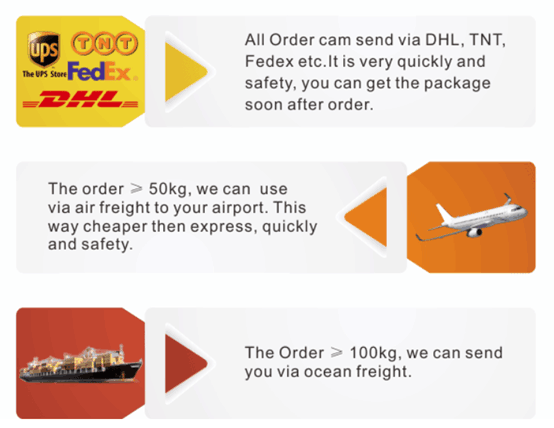
A: For less than 100kg gross weight order will ship with courier like FedEx or UPS, we support customers to place courier orders remotely by their account, we will package the goods well and wait for pick up.For more than 100kg goods, we will transport by Air or Sea according to customers' requirement.
Q5: How long is your after-sales service?
A: We accept customer’s quality complaint in three month after customer received the goods. We provide tech.support for all-life if customer place order from our company.
Q6: How do you treat quality complaint ?
A: We support customer to provide our products to any rightful third party testing organization to test our products according to the COA specification, if the test result is confirm with COA, we will take all the loss for customers.

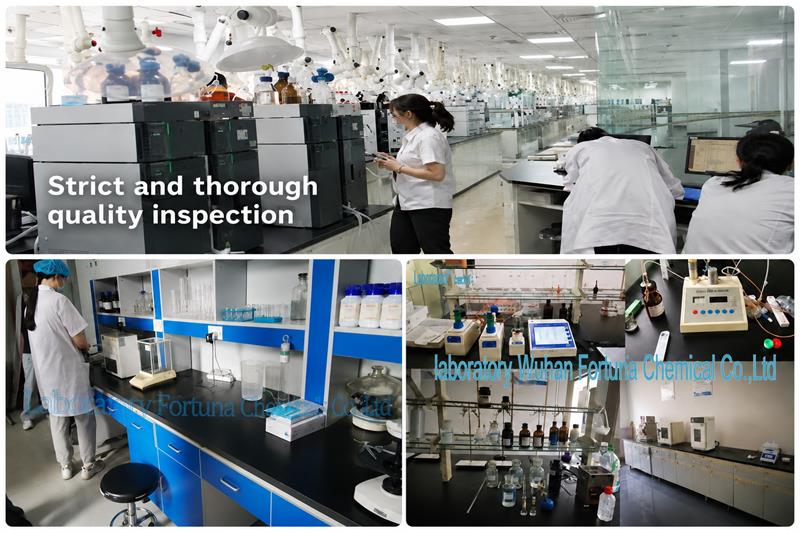
Name:Wuhan Fortuna Chemical Co.,Ltd
Category:Others
Trade Category: Trading Company
Employees: 11 - 50 People
Address: Room 2015, No.2 Building, Kaixin Mansion No.107
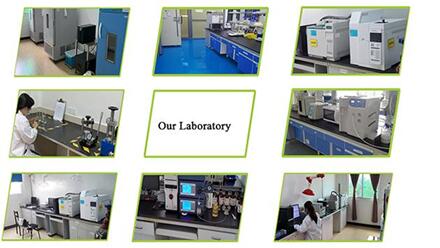
Company Information: Wuhan Fortuna Chemical Co.,Ltd established in 2006, is a big integrative chemical enterprise being engaged in Pharmaceutical and Intermediates, Food and Feed additives, Fine chemicals,Biochemical and Reagent, which is the members of Hubei E-commerce Chamber.
Our company has professional persons who major in chemical R&D and sicentific management, supply fine chemical products with high quality and close service, also supply custom-tailored products according to our clients' requirement.
We have a positive and self-motivated management work team with a common philosophy, caring and commitment through teamwork, our team strive to achieve success in delighting our clients and ourselves.
Since Wuhan Fortuna Chemical Co., Ltd founded, we continuously innovate our products and improve our service, sales network. Hence, we initiate the first sale mode on net in China, which is the retail trade of small package bring along wholesale of diversified management modes. Our products are exported widely to South Korea, Vietnam, Australia, Europe and South America, highly recommended by our clients.We insist on the management creed “Market is our compass, Quality is our life, Credit is our soul”. Clients’ trust is our forward power, their satisfaction is our struggling goal.
Wuhan Fortuna Chemical Co.,Ltd is a professional manufacturer which provide Fucoidan with good quality and best price, welcome to contact us to get COA/TDS/MSDS of Fucoidan.
1. Guaranteed purity;
2. Large quantity in stock;
3. Largest manufacturer;
4. Best service after shipment with email;
5. High quality & competitive price;

Fortunachem Provides Not Only Professional Chemical Products But Also Professional Help
Keeping you up-to-date with all the latest information, news, and events about Fortunachem!



Quick Links
Add:
E-mail:
 中文
中文