
 English
  Español
  français
  العربية
 Search
Search
Resistant Dextrin (CAS 9004-53-9) — Summary
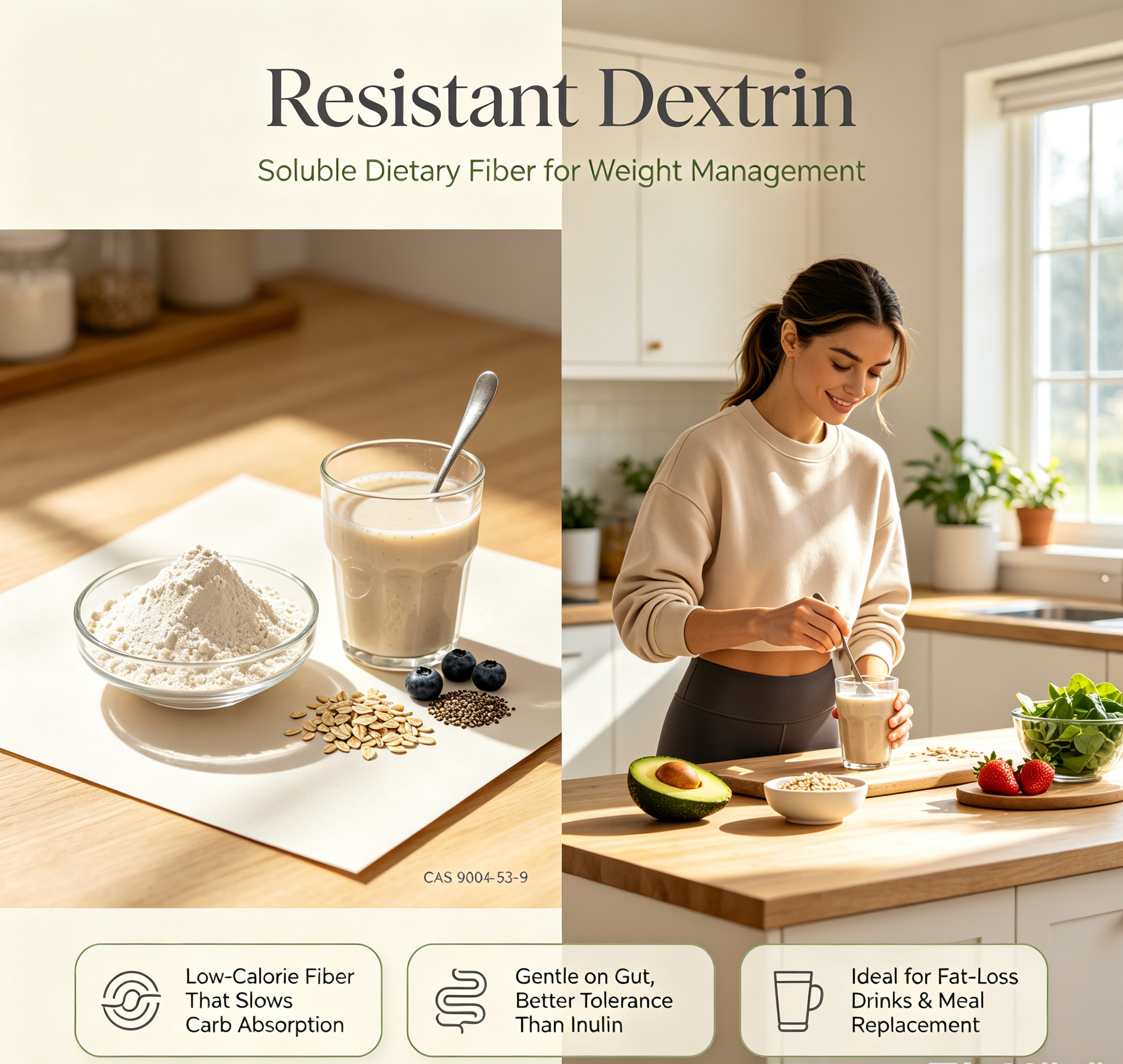
Resistant Dextrin is a water-soluble dietary fiber derived from corn or wheat starch, delivering approximately 2 kcal/g — roughly half the energy of regular carbohydrates. It slows carbohydrate absorption, stabilizes postprandial blood glucose, and reduces insulin spikes, making it highly valuable for fat-loss and fitness applications.
Upon reaching the large intestine, it is slowly fermented by beneficial gut bacteria, producing short-chain fatty acids that enhance satiety, support gut barrier integrity, and regulate lipid metabolism.
Critically, its slow fermentation rate produces approximately 80% less gas than inulin, with a single-dose tolerance of 25–30 g versus inulin's 10 g — making it far more comfortable for GI-sensitive and athletic populations.
Fully soluble, virtually tasteless, low-viscosity, and heat-stable, it is an ideal ingredient for fat-loss beverages and meal replacements. Backed by U.S. GRAS, EU EFSA, and Japanese FOSHU approvals, it is a mainstream blending ingredient in European and American lightweight slimming products.
Specifications of Resistant Dextrin CAS 9004-53-9 COA:
Items | Specifications | Results |
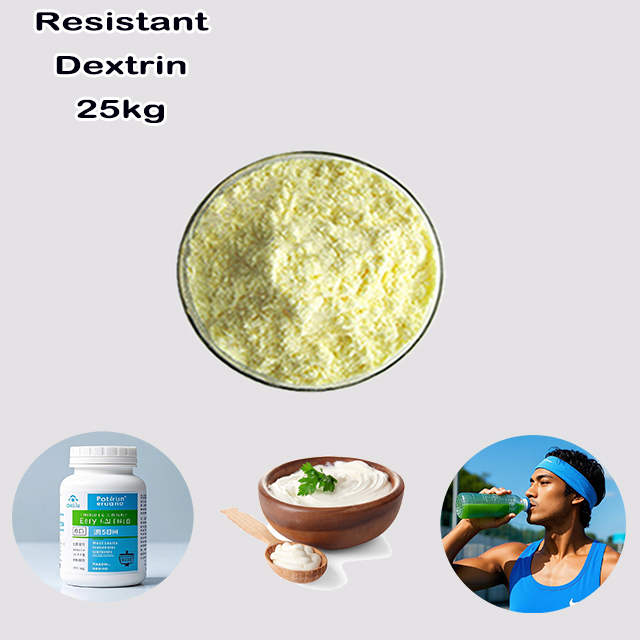
Appearance(25℃) | Amorphous Powder or Granules | Amorphous Powder |
Color | White to Pale Yellow | Pale Yellow |
Taste and Odor | Slightly sweet, with a characteristic odor, free from any off-odors | Slightly sweet, with a characteristic odor, free from any off-odors |
Impurities | No visible foreign matter | No visible foreign matter |
Total Dietary Fiber (on dry basis) w/% | ≥82 | 92.95 |
Water % | ≤6.0 | 4.54 |
PH | 4.0-6.0 | 4.5 |
Ash Content/(g/100g),% | ≤0.5 | <0.05 |
Total plate counts | ≤1000cfu/g | <10cfu/g |
Yeast and Mould | ≤25 | <10 |
E.coli CFU/g | ≤10 | <10 |
Conclusion | The product conforms to the above specifications. | |

Product Name:Resistant Dextrin
CAS:9004-53-9
MF:C18H32O16
Melting point :53.75-54 °C
form:Amorphous powder
color:Pale Yellow
Uses:
Resistant Dextrin (CAS 9004-53-9) — A Comprehensive Overview
I. What Is Resistant Dextrin?
Resistant Dextrin (CAS No. 9004-53-9) is a low-molecular-weight water-soluble dietary fiber produced from corn starch or wheat starch through high-temperature acid hydrolysis followed by enzymatic treatment. Its defining structural feature is the presence of a high proportion of non-standard glycosidic linkages (such as α-1,2 and α-1,3 bonds) that cannot be effectively hydrolyzed by amylolytic enzymes in the human small intestine. As a result, the vast majority of resistant dextrin passes through the upper gastrointestinal tract intact and reaches the large intestine, where it is fermented by the gut microbiota.
Commercially representative products include Fibersol-2 (manufactured by Matsutani Chemical Industry, Japan) and the Nutriose series (manufactured by Roquette, France). Resistant dextrin received GRAS (Generally Recognized as Safe) certification from the U.S. FDA as early as 1990. Between 1992 and 1998, it was successively approved by Japan's Ministry of Health, Labour and Welfare as a FOSHU (Foods for Specified Health Uses) ingredient with three authorized health claims: "regulating intestinal environment," "attenuating postprandial blood glucose response," and "attenuating postprandial triglyceride response." In 2012, China's former Ministry of Health approved resistant dextrin as a functional ingredient that may be added to all categories of ordinary foods without quantity restrictions.
Key Physicochemical Properties
| Parameter | Specification |
|---|---|
| Appearance | White to pale yellow powder |
| Solubility | Highly soluble in water; clear to slightly yellow solution |
| Viscosity | Very low (low-viscosity grade) |
| Sweetness | Approximately 1/10 that of sucrose; virtually tasteless |
| Caloric value | ~1.7–2.0 kcal/g (vs. 4 kcal/g for digestible carbohydrates) |
| Heat/acid stability | Excellent; withstands high-temperature sterilization and acidic environments |
| Recommended daily intake | 5–20 g (divided doses, taken with meals) |
II. Roles in Sports Health and Fitness/Body Shaping
1. Low-Calorie Profile — An "Invisible Ally" for Creating a Caloric Deficit
Resistant dextrin delivers only 1.7–2.0 kcal/g, roughly half the energy of digestible carbohydrates. During a fat-loss phase that demands rigorous energy balance management, it can serve as a direct volumetric replacement for a portion of digestible carbohydrates in formulations — reducing total caloric density without sacrificing mouthfeel or bulk. For individuals aiming to maintain a daily caloric deficit of 300–500 kcal, this "hidden calorie reduction" carries practical significance.
2. Slowing Carbohydrate Absorption — Stabilizing Blood Glucose and Suppressing Lipogenesis
When consumed alongside sugar- or starch-containing foods, resistant dextrin slows the rate of glucose absorption in the small intestine through the following mechanisms:
Altering the secretion of digestive hormones, reducing pancreatic juice secretion and inhibiting carbohydrate absorption;
Modulating metabolic activity by changing the activity of digestive enzymes in the gut;
Selectively inhibiting the absorption of glucose generated after digestion, rather than blocking digestion itself.
This flattens the postprandial glucose curve and reduces insulin secretion. For fitness enthusiasts, stable blood glucose and lower insulin fluctuations translate into fewer lipogenic signals, more sustained energy release, and more consistent physical output during training. Clinical studies have shown that supplementing with resistant dextrin (~10 g/day) for 8–12 weeks can improve insulin resistance indices and inflammatory biomarkers.
3. Modulating Gut Microbiota — Metabolic Benefits via Short-Chain Fatty Acids
Upon reaching the large intestine, resistant dextrin is fermented by beneficial bacteria such as Bifidobacterium and Lactobacillus, producing short-chain fatty acids (SCFAs) — primarily acetate, propionate, and butyrate. These metabolites deliver multiple physiological benefits:
Butyrate: Serves as a direct energy source for colonocytes, maintaining intestinal barrier integrity;
Propionate: Can suppress hepatic glucose output and participate in lipid metabolism regulation;
Acetate: Activates free fatty acid receptors (FFAR2/3), stimulating the release of anorexigenic hormones such as GLP-1 and PYY, thereby enhancing satiety and inhibiting adipocyte lipid synthesis.
For fitness enthusiasts whose long-term high-protein diets may disrupt gut microbial ecology, resistant dextrin acts as a prebiotic substrate that helps maintain microbial diversity and optimize the gut environment.
4. Enhancing Satiety — Controlling Appetite and Reducing Total Energy Intake
Resistant dextrin has excellent water-holding capacity, increasing the volume of chyme in the gastrointestinal tract and delaying gastric emptying, thereby producing a pronounced feeling of fullness. Studies have demonstrated that consuming a beverage containing resistant dextrin before a meal can significantly reduce subsequent food intake.
III. Low-Irritancy Water-Soluble Dietary Fiber — The Core Advantage of Minimal Bloating
This is the most critical differentiator that sets resistant dextrin apart from other dietary fibers — especially inulin.
Fermentation Rate Determines Comfort
Once dietary fibers reach the large intestine, they are fermented by gut bacteria, a process that generates gases such as hydrogen and carbon dioxide. The fermentation speed of different fibers directly determines the volume of gas produced:
| Comparison Dimension | Resistant Dextrin | Inulin |
|---|---|---|
| Fermentation rate | Slow and gradual | Rapid and intense |
| Gas production | ~80% lower than inulin | High; readily causes bloating |
| Single-dose tolerance threshold | 25–30 g without notable discomfort | Bloating likely above 10 g |
| FODMAP status | Low FODMAP; suitable for IBS patients | High FODMAP; should be avoided by IBS patients |
| Suitability for GI-sensitive individuals | ✅ Excellent | ❌ Use with caution |
The reason resistant dextrin produces so little gas lies in its highly branched glucose structure, which is slowly and progressively broken down by gut bacteria — in stark contrast to inulin (a linear fructan chain), which is rapidly fermented and generates large quantities of hydrogen. Clinical meta-analyses show that daily intake of 3.8–13.5 g of resistant dextrin significantly increases bowel movement frequency and stool bulk, with most subjects experiencing no notable bloating, flatulence, or borborygmi.
For athletes and fitness enthusiasts, gastrointestinal comfort before and after training directly impacts exercise performance and compliance with nutritional supplementation. Choosing resistant dextrin over inulin means obtaining the benefits of dietary fiber without encountering embarrassing bloating during training or daily life.
IV. Applications in Fat-Loss Solid Beverages and Meal Replacement Products
An Ideal Formulation Vehicle
The physicochemical properties of resistant dextrin make it an ideal ingredient for fat-loss solid beverages and meal replacement powders:
Fully water-soluble, no clumping: Dissolves approximately 3× faster than conventional fibers; produces a clear, particle-free solution upon reconstitution;
Extremely low viscosity: Does not thicken or create a slurry-like texture in beverages, maintaining a clean, refreshing mouthfeel;
Virtually flavorless: Does not interfere with the product's existing flavor profile; pairs seamlessly with whey protein, coffee, tea, and any other base;
Heat- and acid-resistant: Withstands pasteurization, UHT sterilization, and acidic beverage environments, offering exceptional processing versatility.
Typical Application Scenarios
Fat-loss solid beverages: Using resistant dextrin as the core fiber source, combined with whey protein/soy protein isolate and erythritol, to produce low-calorie, high-fiber meal replacement shakes. Domestic enterprises have already filed sports nutrition food applications (energy-control category) with resistant dextrin as the primary ingredient.
Functional protein powders: Adding 5–10 g of resistant dextrin to fitness protein powders delivers a triple selling point of "high protein + high fiber + low GI" without compromising the powder's original reconstitution properties or taste.
Meal replacement/energy bars: Using resistant dextrin to partially replace maltodextrin or sugar alcohols, lowering the product's GI value while increasing declared dietary fiber content.
Daily fiber supplements: Single-serve sachets (5–10 g per sachet) that can be stirred into water, coffee, or yogurt for instant consumption — the ultimate in convenience.
Example Formulation Logic
A recently published patent for a fat-loss and anti-glycation composite formula (CN 122004467 A) features a core composition of: resistant dextrin 60–75 parts + β-glucan 10–20 parts + mulberry leaf extract 8–15 parts + pueraria (kudzu) root extract 1.5–4 parts + lotus leaf extract 1–3 parts, in solid beverage/granule/powder form. In this formula, resistant dextrin serves as the foundational backbone ingredient,the core functions of delaying sugar and fat absorption and providing dietary fiber.
V. Comparison with Inulin — Comprehensive Superiority in Gastrointestinal Tolerance
Inulin is a natural fructan extracted from chicory root and other plants. Like resistant dextrin, it is a water-soluble dietary fiber and prebiotic. However, the two differ fundamentally in gastrointestinal tolerance:
In-Depth Comparison
| Dimension | Resistant Dextrin | Inulin |
|---|---|---|
| Chemical nature | Glucose-based (glucan) | Fructose-based (fructan / FODMAP) |
| Fermentation speed | Slow and gradual | Rapid and intense |
| Gas production | Minimal (~80% lower than inulin) | Substantial hydrogen generation; prone to bloating |
| Single-dose discomfort threshold | 25–30 g | ~10 g |
| Suitability for IBS patients | ✅ Low FODMAP; safe | ❌ High FODMAP; triggers symptoms in 68% of IBS patients |
| Impact on athletic populations | Safe for use before and after training | Pre-training intake may cause exercise-induced bloating |
| Impact on mouthfeel | No viscosity increase; does not alter texture | Has thickening effect; tends to clump in cold water |
| Thermal stability | Excellent (suitable for baking and hot beverages) | Poor (not heat- or acid-resistant) |
Comprehensive regulatory credentials: U.S. GRAS certification + EU EFSA health claim approval (ID 852, 1588: "reduction of postprandial glycemic responses") + Japanese FOSHU authorization for three health claims — enabling barrier-free market access across all major global jurisdictions;
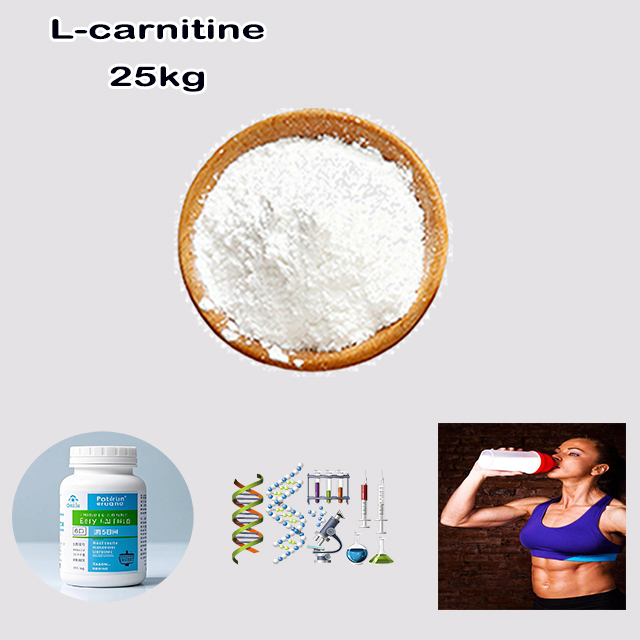
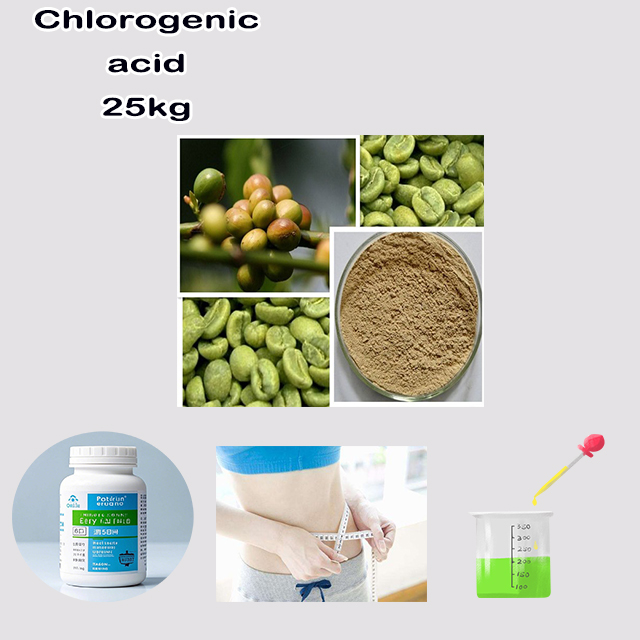
Exceptional formulation compatibility: Can be blended with whey protein, collagen peptides, MCT oil powder, L-carnitine, white kidney bean extract, green coffee bean extract, and virtually all mainstream slimming functional ingredients without affecting taste or stability;
"Clean label" friendly: Colorless, odorless, and tasteless — consumers barely perceive its presence in the final product, aligning with the "Invisible Fiber" product philosophy prevalent in European and American markets;
Strong brand endorsement: Coca-Cola Japan's "Coca-Cola Plus" and "Sprite Fiber+" both feature resistant dextrin as their core functional ingredient, completing significant consumer education and market awareness building.
Resistant dextrin + whey protein: High protein + high fiber + low GI — ideal for meal replacement shakes;
Resistant dextrin + MCT oil powder + collagen peptides: Keto-friendly meal replacement, combining satiety with skin health support;
Resistant dextrin + white kidney bean extract + mulberry leaf extract: Multi-target blockade of carbohydrate and fat absorption;
Resistant dextrin + inulin (small proportion) + galactomannan: Triple-fiber synergy, with glycemic control effects approximately 60% superior to single-ingredient approaches (Nutrilite 3:2:1 ratio protocol).





Also, if you have any other questions, you can contact us
FAQ From Wuhan Fortuna Chemical Co.,Ltd
Q1: Can I get a sample for free ?
A: For small QTY and low value product, we can provide sample for free exclude shipping cost. For high value sample, we will charge the basic sample cost, but we can refund all the cost if customers place order after sample test.
Q2: How to confirm the product quality before placing orders ?
A: Most of our products confirm to international standards like USP/EP/BP/JP/CP. We will provide COA/TDS/MSDS for customers to confirm the specification before placing order.
Q3: What is the payment you accept?
A: For small and low value order, we accept CreditCard, MaterCard,VISA,Western Union and T/T.For large order, we can do T/T and L/C. Any pay on delivery or pay-after are not available for us.
Q4: What is your shipment way ?
A: For less than 100kg gross weight order will ship with courier like FedEx or UPS, we support customers to place courier orders remotely by their account, we will package the goods well and wait for pick up.For more than 100kg goods, we will transport by Air or Sea according to customers' requirement.
Q5: How long is your after-sales service?
A: We accept customer’s quality complaint in three month after customer received the goods. We provide tech.support for all-life if customer place order from our company.
Q6: How do you treat quality complaint ?
A: We support customer to provide our products to any rightful third party testing organization to test our products according to the COA specification, if the test result is confirm with COA, we will take all the loss for customers.


Name:Wuhan Fortuna Chemical Co.,Ltd
Category:Others
Trade Category: Trading Company
Employees: 11 - 50 People
Address: Room 2015, No.2 Building, Kaixin Mansion No.107
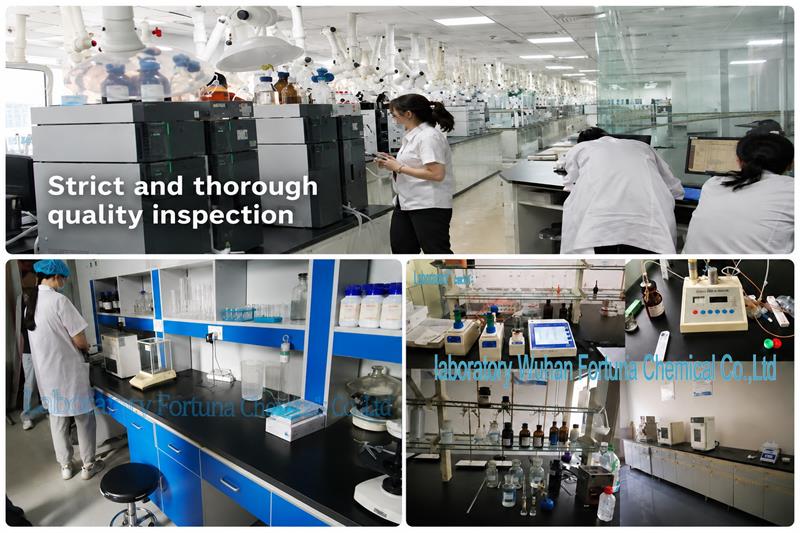
Company Information: Wuhan Fortuna Chemical Co.,Ltd established in 2006, is a big integrative chemical enterprise being engaged in Pharmaceutical and Intermediates, Food and Feed additives, Fine chemicals,Biochemical and Reagent, which is the members of Hubei E-commerce Chamber.
Our company has professional persons who major in chemical R&D and sicentific management, supply fine chemical products with high quality and close service, also supply custom-tailored products according to our clients' requirement.
We have a positive and self-motivated management work team with a common philosophy, caring and commitment through teamwork, our team strive to achieve success in delighting our clients and ourselves.
Since Wuhan Fortuna Chemical Co., Ltd founded, we continuously innovate our products and improve our service, sales network. Hence, we initiate the first sale mode on net in China, which is the retail trade of small package bring along wholesale of diversified management modes. Our products are exported widely to South Korea, Vietnam, Australia, Europe and South America, highly recommended by our clients.We insist on the management creed “Market is our compass, Quality is our life, Credit is our soul”. Clients’ trust is our forward power, their satisfaction is our struggling goal.
Wuhan Fortuna Chemical Co.,Ltd is a professional manufacturer which provide Resistant Dextrin with good quality and best price, welcome to contact us to get COA/TDS/MSDS of Resistant Dextrin.
1. Guaranteed purity;
2. Large quantity in stock;
3. Largest manufacturer;
4. Best service after shipment with email;
5. High quality & competitive price;

Fortunachem Provides Not Only Professional Chemical Products But Also Professional Help
Keeping you up-to-date with all the latest information, news, and events about Fortunachem!



Quick Links
Add:
E-mail:
 中文
中文