 English
  Español
  français
  العربية
 Search
Search
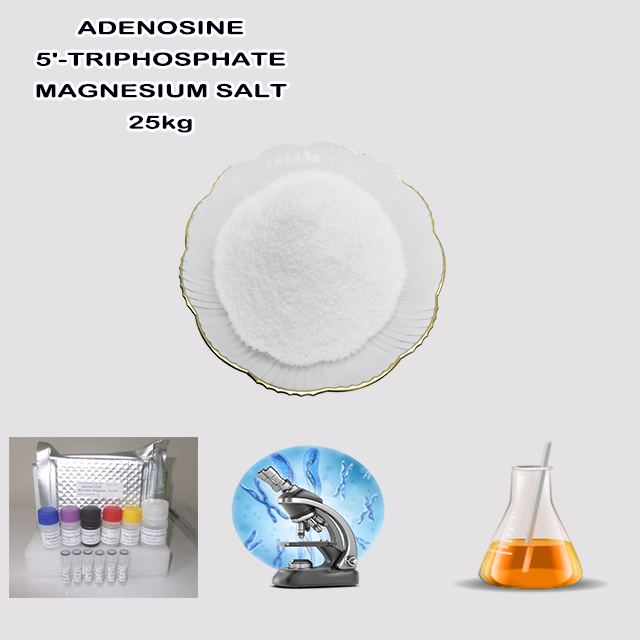

Adenosine 5'-triphosphate magnesium salt (Mg-ATP) is the biologically active form of ATP, essential for enzyme function. Its primary selling points include immediate readiness for enzymatic reactions without needing manual magnesium addition, ensuring consistent kinetics in kinase assays and molecular biology. The magnesium ion stabilizes the triphosphate chain, offering superior shelf-life and resistance to hydrolysis compared to free acid ATP. It features high water solubility for easy solution preparation and comes with guaranteed high purity and low ADP contamination, critical for accurate drug screening and luciferase-based diagnostics. This pre-complexed salt eliminates experimental variability, saves preparation time, and serves as the industry standard for reliable, high-performance biochemical research and industrial applications requiring precise ATP delivery.
Adenosine 5'-Triphosphate Magnesium Salt (often abbreviated as Mg-ATP, ATP-Mg, or Magnesium Adenosine Triphosphate) is the biologically active form of ATP. In living cells, ATP almost never exists as a free acid; it naturally binds with magnesium ions ( Mg2+) to form a stable complex.
Here is a breakdown of what it is and its key selling points for researchers and industrial buyers:
What is it?
Chemical Nature: It is a coordination complex where the triphosphate chain of Adenosine Triphosphate (ATP) chelates a magnesium ion.
Formula: Typically represented as C10H12N5O13P3Mg (often with varying hydration levels, e.g., disodium salt hydrate).
Biological Role: It is the true substrate for most ATP-dependent enzymes (kinases, ATPases, helicases, polymerases). Enzymes recognize and bind the Mg-ATP complex, not free ATP.
Appearance: Usually a white to off-white lyophilized powder or crystalline solid.
Solubility: Highly soluble in water, forming a neutral to slightly acidic solution depending on the specific salt formulation (often adjusted to pH 7.0).
Key Selling Points (Why buy the Magnesium Salt instead of Free Acid ATP?)
1. "Ready-to-Use" Biological Activity (The Primary Selling Point)
The Issue: Free acid ATP requires the user to manually add magnesium chloride ( MgCl2 ) in precise stoichiometric ratios to activate it for enzymatic reactions. Incorrect ratios can inhibit enzymes or lead to inconsistent data.
The Solution: Mg-ATP comes pre-complexed. It is immediately bioactive upon dissolution. This eliminates the need for buffer optimization regarding magnesium concentration, ensuring immediate and consistent enzyme kinetics.
Benefit: Saves time in assay development and reduces experimental variability.
2. Superior Stability
The Issue: Free ATP acid is hygroscopic and chemically less stable; it can hydrolyze (break down into ADP and phosphate) more readily, especially in solution or if moisture is absorbed.
The Solution: The magnesium ion stabilizes the triphosphate chain through chelation, making the salt significantly more stable against hydrolysis during storage and handling.
Benefit: Longer shelf life, less waste due to degradation, and more reliable concentration over time.
3. Enhanced Solubility and Handling
The Issue: The free acid form of ATP has limited solubility in water and often requires pH adjustment with strong bases (like NaOH) to dissolve fully, which can be tedious.
The Solution: The magnesium salt (often formulated as a disodium or trilithium salt alongside the Mg) is highly water-soluble and dissolves rapidly to form clear solutions without extensive pH manipulation.
Benefit: Easier preparation of stock solutions for high-throughput screening or large-scale reactions.
4. Critical for Specific High-Value Applications
This product is essential for several lucrative and critical research areas:
Kinase Assays: Essential for drug discovery screens targeting kinases (a major class of drug targets for cancer and inflammation).
Luciferase Bioluminescence: Used in cell viability assays and ATP detection kits. The Mg-ATP complex is required for the luciferase reaction to produce light efficiently.
Molecular Biology: Required for DNA/RNA polymerases, ligases, and restriction enzymes in cloning and sequencing workflows.
Muscle Physiology: Used in in vitro motility assays to study muscle contraction mechanisms.
5. Consistency and Purity Standards
The Point: High-grade Mg-ATP is sold with strict specifications for Purity (>98-99%) and low contamination of ADP and AMP.
Why it matters: Even small amounts of ADP can inhibit certain enzymes or skew kinetic data ( Km and Vmax calculations). Suppliers market their ability to provide ultra-low ADP content as a premium feature.
Summary Comparison for Buyers
Feature Free Acid ATP Mg-ATP (Selling Point)
Enzyme Readiness Requires manual Mg2+addition Instant activity; no prep needed
Stability Moderate; prone to hydrolysis High; stabilized by chelation
Solubility Low; requires pH adjustment High; dissolves easily
Experimental Error Risk of incorrect Mg:ATP ratio Eliminates ratio errors
Primary Use Case General chemical storage Enzymatic assays, Drug Screening, Diagnostics
Conclusion
The main selling point of Adenosine 5'-Triphosphate Magnesium Salt is convenience and reliability. For any laboratory performing enzymatic reactions, buying the pre-complexed Mg-salt removes a critical variable (magnesium concentration), ensures maximum enzyme activity immediately, and provides a more stable product for long-term storage. It is the industry standard for kinase drug discovery and molecular biology applications.
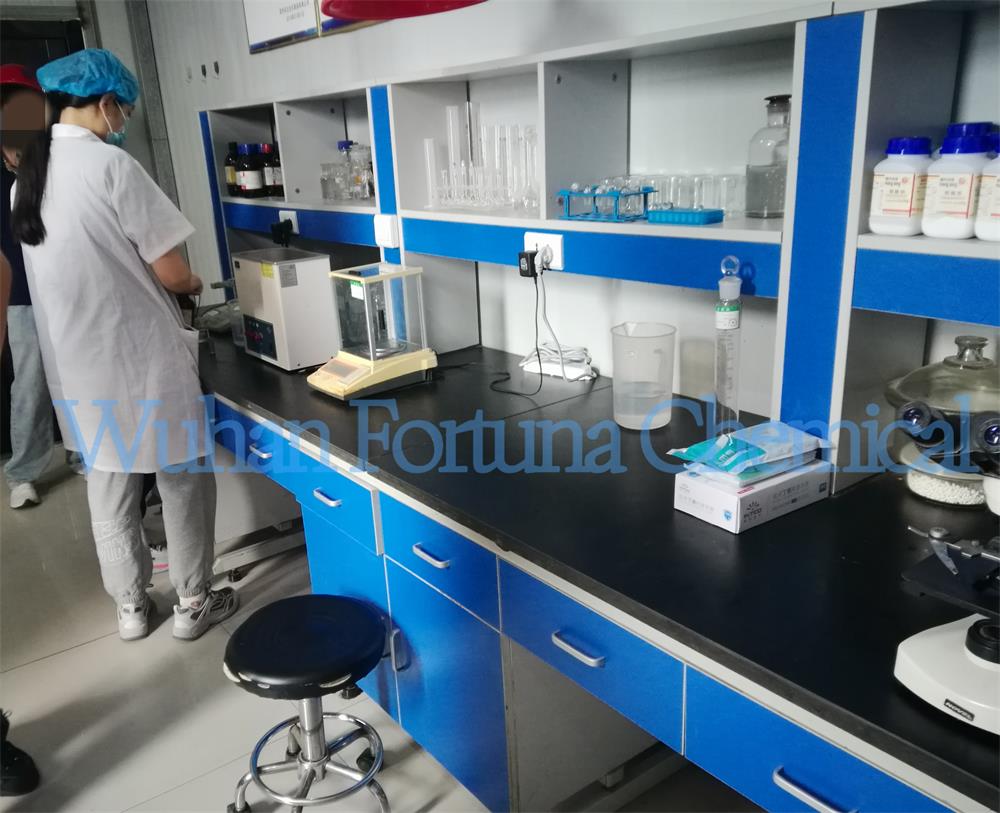
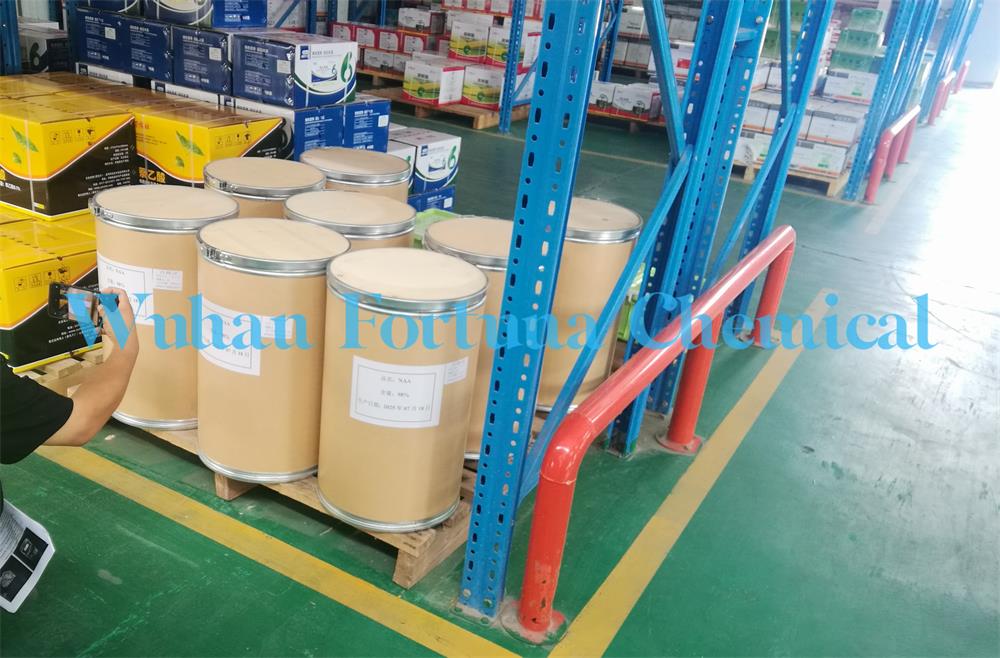
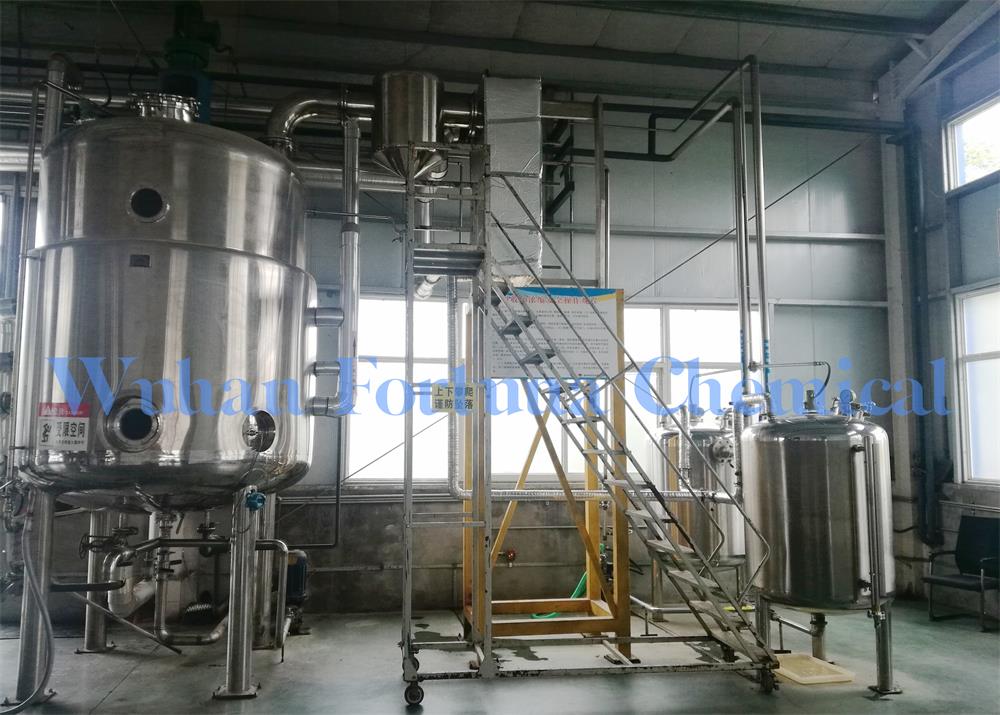

Fortunachem Provides Not Only Professional Chemical Products But Also Professional Help
Keeping you up-to-date with all the latest information, news, and events about Fortunachem!



Quick Links
Add:
E-mail:
 中文
中文