 English
  Español
  français
  العربية
 Search
Search
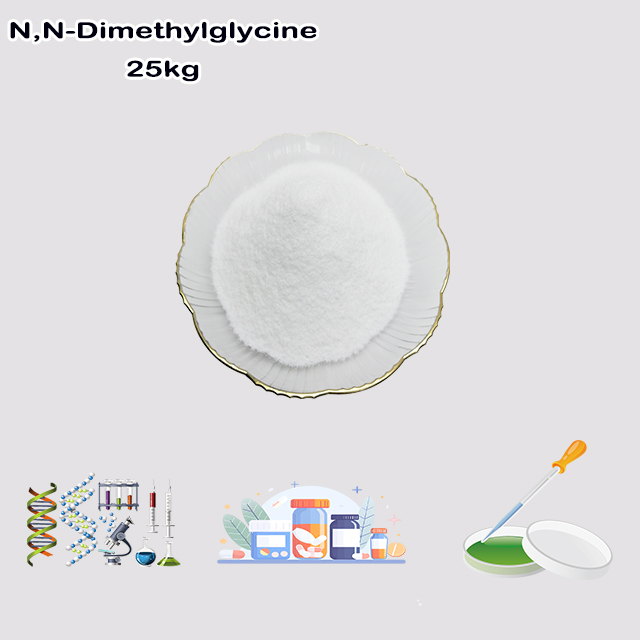
N,N-Dimethylglycine (DMG) is a derivative of the amino acid glycine. It is primarily known as a dietary supplement and a feed additive for animals.
In humans, it is marketed with claims of boosting energy, improving exercise performance, and supporting immunity. However, scientific evidence for these benefits is weak and inconclusive. Its use is more established in veterinary medicine, where it is added to livestock and racehorse feed to potentially improve growth, stamina, and immune function.
DMG is generally safe at common doses but is not an essential nutrient. Despite sometimes being called "Vitamin B15," this is a misnomer, as it is not a recognized vitamin. Regulatory agencies do not endorse its health claims.
Items | Specifications | Results |
Appearance | A white crystalline powder | white crystalline powder |
Assay | ≥98% | 99.2% |
PH(2%solution) | 4.4-7.0 | 6.0 |
Melting Point | 178.0℃-185.0℃ | 180℃-183℃ |
Ignition residue | NMT0.2% | 0.12% |
Heavy metal | NMT10ppm | complies |
AS | NMT2ppm | complies |
Conclusion | The product conforms to the above specifications. | |
N,N-Dimethylglycine (DMG) is a derivative of the amino acid glycine. Chemically, it is glycine with two methyl groups attached to its nitrogen atom. It is sometimes classified as an "ergogenic compound" or a "methyl donor" and is found naturally in small amounts in foods like beans, liver, and grains.
Chemical Structure: It is an intermediate metabolite in the choline-to-glycine pathway.
Production: It can be synthesized industrially or derived from natural sources. It is often sold as a dietary supplement (sometimes under names like Vitamin B15 or pangamic acid, though these are not chemically identical and are controversial).
The most common use is as a supplement with several claimed (but often weakly supported) benefits:
Exercise Performance: Marketed to reduce lactic acid buildup, improve oxygen utilization, and boost stamina and recovery. Scientific evidence is mixed and generally inconclusive.
Immune System Support: Some studies (often in animals or small human trials) suggest it may modulate immune response, but robust clinical evidence is lacking.
Antioxidant: Acts as an antioxidant and may support liver function.
Methyl Donor: Participates in cellular methylation processes, potentially aiding in detoxification and hormone production.
Its use is more established and accepted in animal nutrition:
Livestock & Poultry: Added to feed to improve growth rates, feed efficiency, and immune response.
Racehorses & Sporting Dogs: Used as an ergogenic aid to potentially enhance performance and recovery.
Some proponents advocate for its use in specific conditions, but these are not widely accepted by mainstream medicine:
Autism Spectrum Disorders: Anecdotal reports suggest improvements in speech, behavior, and immune function in some children, but large-scale, rigorous studies are absent.
Mitochondrial Support: Proposed to help mitochondrial disorders by improving cellular energy production.
Epilepsy: A few small studies suggested possible reduction in seizure frequency, but more research is needed.
Methyl Group Donation: Helps in synthesizing compounds like SAM-e (important for metabolism and neurotransmitter production).
Improving Oxygen Utilization: May enhance cellular respiration by optimizing the use of oxygen in the Krebs cycle.
Immunomodulation: May influence cytokine production and antibody response.
Generally Recognized as Safe (GRAS) for use in animal feed at certain levels.
As a Human Supplement: Considered likely safe for most adults at typical doses (e.g., 50–200 mg/day). Mild side effects can include gastrointestinal upset or a mild fishy body odor.
Regulatory Status: Not an approved drug for treating any disease. Sold as a dietary supplement in the US (FDA does not evaluate supplements for efficacy). It is not officially recognized as a vitamin (despite the "B15" label).
Important Note: Claims made by supplement manufacturers are often stronger than the scientific evidence supports. Consumers should be cautious and consult healthcare providers.
N,N-Dimethylglycine (DMG) is a compound with modest evidence for veterinary use (improving animal growth/performance) and significant but unproven claims in human supplements (for energy, immunity, autism, etc.). While it appears safe at low doses, its therapeutic benefits for humans lack strong scientific validation. It is not an essential nutrient, and its marketing as "Vitamin B15" is misleading.

Fortunachem Provides Not Only Professional Chemical Products But Also Professional Help
Keeping you up-to-date with all the latest information, news, and events about Fortunachem!


Quick Links
Add:
E-mail:
 中文
中文