 English
  Español
  français
  العربية
 Search
Search
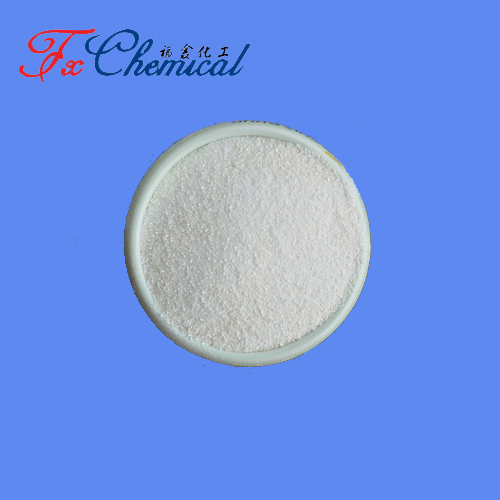
D‑Altrose (CAS 1990‑29‑0) is a rare unnatural aldohexose monosaccharide, the C‑3 epimer of D‑mannose, formula C₆H₁₂O₆. It is water‑soluble and barely found in nature, mostly obtained via complex chemical or enzymatic synthesis. Mammalian cells poorly metabolise it. It shows antioxidant effects by inhibiting mitochondrial reactive‑oxygen‑species generation. It is mainly applied in glycobiology research for enzyme‑substrate studies and glyco‑engineering. It has no commercial food‑grade usage and remains a lab‑scale research sugar rather than an industrial raw material.
D‑Altrose is a rare aldohexose monosaccharide, scarcely existing in nature and mainly produced via complex chemical or enzymatic synthesis. To date, it has obtained no official regulatory approval as a food‑grade raw material or food additive worldwide, and there are no real commercial food‑industry applications. Its connection with food remains confined to laboratory‑scale research exploration rather than mass production for consumer food products.
In basic food‑related research, scientists investigate its physicochemical and metabolic properties for rare‑sugar comparative studies. D‑Altrose is water‑soluble, yet it possesses faint sweetness. Mammalian metabolic systems hardly catabolise this sugar. Research trials evaluate its behaviour during thermal processing, including thermal stability, Maillard reaction performance and moisture‑holding capacity under simulated food‑processing conditions. Such experiments serve as reference datasets for rare‑sugar libraries, instead of providing direct formulation guidance for factory food manufacturing.
Physiologically, in‑vitro and animal studies indicate D‑Altrose exhibits mild antioxidant capacity by suppressing mitochondrial reactive oxygen species generation. Researchers explore whether it could potentially mitigate oxidative deterioration in food matrices. Nevertheless, high production costs, difficult purification and insufficient toxicological safety data block practical food adoption. Unlike commercialised rare sugars such as raffinose or D‑allulose, D‑Altrose cannot be economically manufactured in large batches. Its complex synthesis workflow results in extremely high unit cost, which makes it unrealistic for adding into baked goods, beverages, dairy or confectionery.
Another research direction evaluates its digestive behaviour. Since human digestive enzymes cannot effectively break down D‑Altrose, scholars test its potential prebiotic effect in lab models, observing how intestinal flora ferment this monosaccharide. Still, no human feeding trials confirm reliable gut‑health benefits. Regulators have not completed safety assessments for oral human consumption as food material. Therefore, it cannot be legally added into any marketed food items.
In summary, D‑Altrose has zero practical commercial applications within the food sector. It functions merely as a reference compound in academic food‑science laboratories. Restricted by low natural abundance, expensive synthesis, incomplete safety evidence and absence of regulatory clearance, D‑Altrose will not appear in mainstream food formulations in the near future. All relevant food‑oriented work stays at preliminary research stages, without industrial‑scale real‑world deployment.

Fortunachem Provides Not Only Professional Chemical Products But Also Professional Help
Keeping you up-to-date with all the latest information, news, and events about Fortunachem!



Quick Links
Add:
E-mail:
 中文
中文