
 English
  Español
  français
  العربية
 Search
Search
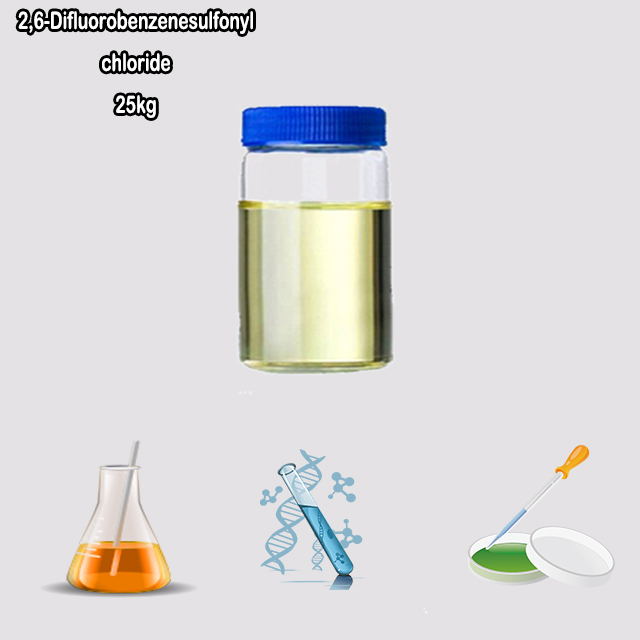
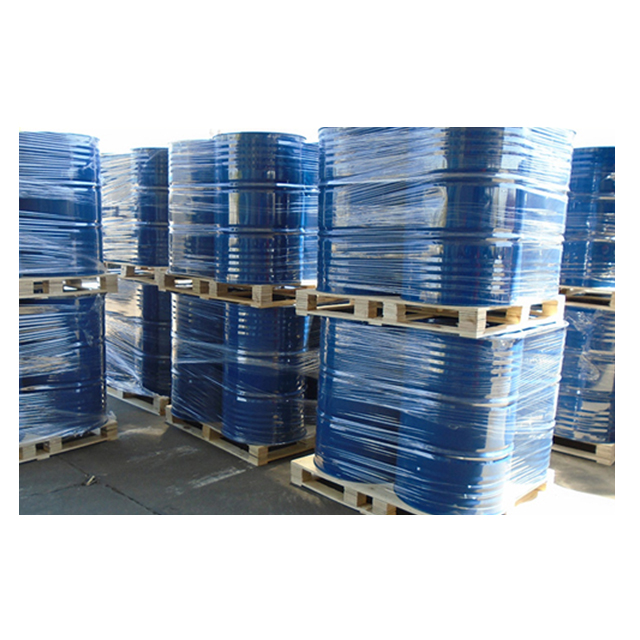
2,6-Difluorobenzenesulfonyl chloride is an organic reagent containing a reactive sulfonyl chloride group attached to a benzene ring with two fluorine atoms. Its primary use is as a key building block in chemical synthesis, especially for creating sulfonamide compounds.
The main applications are:
Pharmaceuticals: It is extensively used in drug discovery to synthesize new potential medicines, particularly as a component of enzyme inhibitors.
Agrochemicals: Serves as an intermediate for developing advanced herbicides, fungicides, and insecticides.
Material Science: Used to modify polymers and in dyestuff chemistry.
Its value lies in efficiently introducing the specific 2,6-difluorobenzenesulfonyl group into larger molecules, altering their biological activity and physical properties for targeted applications.
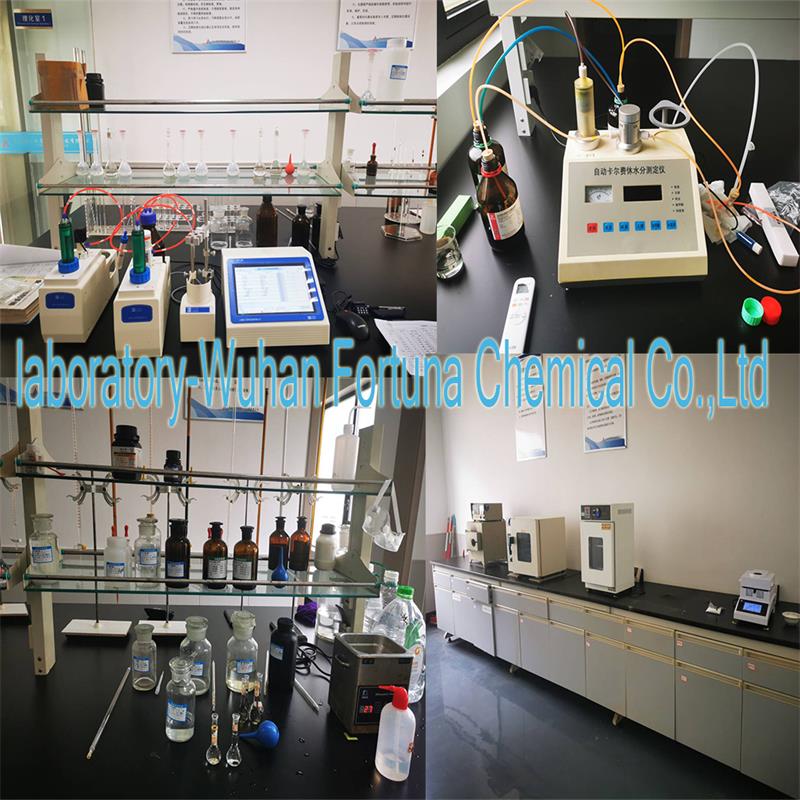
Items | Specifications | Results |
Appearance | Yellowish liquid | Yellowish liquid |
Identification | The retention time of the major peak of the Sample solution corresponds to the Standard solution. | Complies |
Water | ≤0.5% | 0.13% |
Related substances | Individual impurities:≤0.5% Total impurities:≤1.0% | 0.06% 0.15% |
Purity(HPLC) | ≥99.0% | 99.85% |
Conclusion | The product conforms to the above specifications. | |
2,6-Difluorobenzenesulfonyl chloride is an organic compound with the molecular formula C₆H₃ClF₂O₂S. It belongs to the class of arylsulfonyl chlorides, which are key reagents in organic and medicinal chemistry.
Structure: It consists of a benzene ring with two fluorine atoms at the 2 and 6 positions (meta to each other, ortho to the sulfonyl chloride group) and a reactive sulfonyl chloride (-SO₂Cl) group.
Key Property: The -SO₂Cl group is highly electrophilic and reactive, making the compound an excellent sulfonylation agent. The fluorine atoms influence the compound's electronic properties and lipophilicity, which can be useful in drug design.
Its main utility stems from its role as a building block (synthon) to introduce the 2,6-difluorobenzenesulfonyl moiety into larger molecules. This is done primarily through sulfonamide bond formation.
This is the most significant application. The compound is used to create sulfonamide derivatives, a common pharmacophore in many drugs.
Sulfonamide Formation: It reacts readily with amines (R-NH₂) to form sulfonamides (R-NH-SO₂-Ar), where Ar is the 2,6-difluorophenyl group.
Ar-SO₂Cl + R-NH₂ → Ar-SO₂-NH-R + HCl
Purpose in Drug Discovery:
Enzyme Inhibition: Sulfonamides are excellent zinc-binding groups (ZBGs) and are frequently used to design inhibitors for metalloenzymes, most notably carbonic anhydrases (CAs). The fluorine substitution pattern can tune the inhibitor's potency and selectivity.
Pharmacophore Integration: The benzenesulfonyl group can act as a rigid linker or a hydrophobic anchor within a drug molecule, improving its binding to a biological target.
Library Synthesis: It is used in combinatorial chemistry to create diverse libraries of sulfonamide compounds for high-throughput screening against disease targets.
Similar to pharmaceuticals, sulfonamide derivatives are found in some herbicides, fungicides, and insecticides. The 2,6-difluoro motif can enhance properties like environmental stability, lipophilicity (aiding leaf penetration), and target specificity.
Polymer Modification: Can be used to introduce functional groups onto polymers.
Dyestuffs & Pigments: As an intermediate in the synthesis of specialty dyes and pigments where the sulfonamide group affects color and solubility properties.
As a versatile reagent for:
Sulfonylation: Introducing the sulfonyl protecting group for amines (though often cleavable under stronger conditions).
Preparation of Sulfones, Sulfonate Esters: By reacting with organometallic reagents or alcohols, respectively.
A typical use in drug discovery:
Start: 2,6-Difluorobenzenesulfonyl chloride.
React with a primary amine-containing scaffold (e.g., an amino-heterocycle with known biological activity).
Form a new sulfonamide derivative.
Test the new derivative for enhanced pharmacological activity, better pharmacokinetics, or reduced side effects.
Why the specific 2,6-difluoro substitution?
Steric & Electronic Effects: The two fluorines flanking the sulfonamide group create a specific steric and electronic environment. This can restrict bond rotation and pre-organize the molecule for optimal binding to a protein's active site.
Metabolic Stability: The C-F bonds are strong and resist metabolic breakdown (in vivo), potentially leading to drugs with longer duration of action.
Lipophilicity Modulation: Fluorine atoms increase lipophilicity, which can improve cell membrane permeability.
Corrosive & Moisture-Sensitive: Like most sulfonyl chlorides, it reacts violently with water, releasing hydrogen chloride (HCl). It is corrosive to skin, eyes, and respiratory tract.
Typical Handling: Must be used under anhydrous conditions (e.g., in a glovebox or using Schlenk techniques with dry solvents). Reactions often require a base (e.g., triethylamine, pyridine) to neutralize the HCl produced.
Storage: Stored sealed under an inert atmosphere (argon/nitrogen) at low temperatures.
2,6-Difluorobenzenesulfonyl chloride is a specialized chemical reagent primarily used as a key building block in research and development, especially for:
Synthesizing potential drug candidates (sulfonamide-based enzyme inhibitors).
Creating agrochemicals.
Introducing a unique, fluorine-substituted benzenesulfonyl group into complex molecules to modulate their biological and physical properties.
It is a tool for chemists, not an end-product itself, valued for its ability to efficiently form sulfonamide linkages in molecular structures targeted for biological activity.

Fortunachem Provides Not Only Professional Chemical Products But Also Professional Help
主图.jpg "China Original Manufacturer Hot Selling High Quality Phosphatidylcholine CAS NO. 97281-47-5")
ethylamine主图.jpg "China Factory Supply 2-(2-Methoxyphenoxy)ethylamine CAS 1836-62-0")
Keeping you up-to-date with all the latest information, news, and events about Fortunachem!



Quick Links
Add:
E-mail:
 中文
中文