 English
  Español
  français
  العربية
 Search
Search
Dihydroxyacetone, commonly abbreviated as DHA, is a three-carbon ketose mainly used to produce a sunless tanning effect in cosmetic formulations. It has the molecular formula C3H6O3 and CAS number 96-26-4. When applied externally, DHA reacts with amino acids in the skin’s surface layer and creates a temporary brown coloration without requiring exposure to ultraviolet radiation.
For formulators, distributors and procurement teams, identifying DHA by name alone is not enough. Its intended grade, purity, impurity profile, storage requirements, batch documentation and packaging should all be evaluated before a sample or commercial order is approved.
DHA, dihydroxyacetone and 1,3-dihydroxyacetone generally refer to the same chemical substance identified by CAS 96-26-4. Other recognized names include 1,3-dihydroxy-2-propanone and 1,3-dihydroxypropan-2-one.
According to the NIST Chemistry WebBook, its molecular structure contains three carbon atoms, six hydrogen atoms and three oxygen atoms. DHA is a simple ketose because its three-carbon structure contains a ketone functional group.
| Chemical identity | Information |
| Common name | Dihydroxyacetone |
| Abbreviation | DHA |
| INCI name | Dihydroxyacetone |
| CAS number | 96-26-4 |
| Molecular formula | C3H6O3 |
| Molecular weight | 90.08 g/mol |
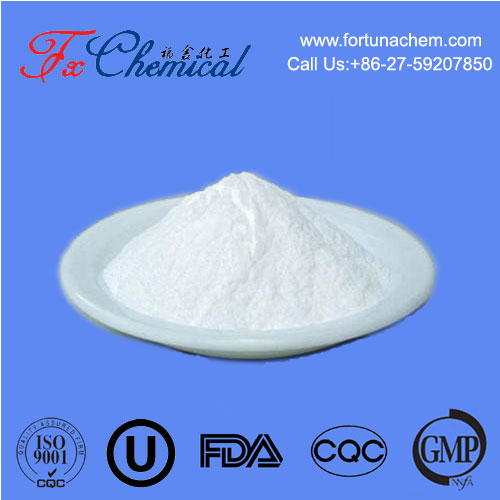
| General physical form | White to almost white crystalline powder |
DHA should not be confused with dihydroxyacetone phosphate, usually abbreviated as DHAP. DHAP is a phosphorylated biochemical intermediate, while cosmetic DHA is the non-phosphorylated compound represented by CAS 96-26-4.
The dihydroxyacetone formula is C3H6O3. Its structure can be written as HOCH2–CO–CH2OH, showing a central carbonyl group positioned between two hydroxymethyl groups. Its relatively small, oxygen-rich structure also explains why water content, storage conditions and formulation compatibility require attention during quality evaluation.
Dihydroxyacetone synthesis and production can use chemical or biotechnological routes. One widely studied production method is the controlled oxidation of glycerol by Gluconobacter oxydans. In this process, a membrane-bound glycerol dehydrogenase supports the conversion of glycerol into DHA. Research has examined fermentation conditions, oxygen transfer and feeding strategies to improve production efficiency.
The manufacturing route alone does not determine whether a material is suitable for a particular application. Buyers should evaluate the purified final product, its current specification, analytical methods and batch results instead of assuming that every fermentation-derived or chemically produced material has the same quality profile.
DHA is widely used as a color additive in self-tanning lotions, creams, mousses and related externally applied products. After application, it reacts with amino groups in components of the outermost skin layer. This non-enzymatic reaction gradually produces brown-colored compounds, creating the appearance of a tan.
The result is temporary because the reaction occurs mainly at the skin’s surface. Color development, uniformity and final tone can be affected by the DHA concentration, formulation system, application method and condition of the skin.
DHA itself is not a sunscreen or UV filter. A self-tanning product should not claim sun protection unless the finished formulation contains approved sunscreen ingredients and is labeled according to the applicable market regulations. The FDA guidance on sunless tanners and bronzers specifically states that products without sunscreen ingredients do not protect users against sunburn.
Regulatory requirements also depend on the application method and destination market. In the United States, the FDA permits DHA as a color additive for external application but restricts exposure to the eyes, lips, mucous membranes and internal exposure through inhalation or ingestion. Developers of sprays or mists therefore need to consider both ingredient compliance and the consumer’s potential exposure route.
A DHA specification establishes the acceptance limits for supplied material, while a certificate of analysis records the result for a particular batch. Buyers should review both documents because a historical or representative COA does not replace current lot information.
| Quality parameter | Why it matters |
| Identity | Confirms that the material is DHA rather than a similarly named compound |
| Appearance | Helps identify discoloration, contamination or physical changes |
| Assay or purity | Shows whether the active material meets the agreed specification |
| Water content | Supports evaluation of material condition and batch consistency |
| pH | Provides a reference for aqueous quality and formulation assessment |
| Residue on ignition | Indicates the level of non-volatile inorganic residue |
| Heavy metals and specified elements | Supports impurity control and market compliance |
| Related impurities | Helps buyers evaluate degradation and manufacturing controls |
| Microbiological quality | May be relevant depending on grade and intended application |
The analytical method is as important as the reported result. An assay value should identify the test method used, and results such as “conforms” should be supported by a defined acceptance criterion. Before purchasing, buyers should confirm whether the supplied specification matches the intended cosmetic, research or synthesis application.
Stability also needs to be assessed at both raw-material and finished-formulation levels. The European Commission’s Scientific Committee on Consumer Safety opinion on DHA discusses the chemical identity, purity, impurities and stability of specific test batches. However, published conditions for individual study batches should not automatically be treated as universal storage instructions for every commercial product.
The supplier’s current TDS and SDS should govern handling and storage. Formulators should also conduct stability and compatibility testing in the intended formulation and packaging. Useful checkpoints include appearance, odor, pH, viscosity, DHA assay and changes that occur during accelerated and real-time storage.
Buyers comparing dihydroxyacetone suppliers should evaluate more than price per kilogram. Reliable sourcing depends on whether the material, documentation and supply conditions match the intended application.
Confirm chemical identity and grade. Verify the product name, CAS 96-26-4, intended grade and supplied physical form. Avoid relying only on the abbreviation “DHA,” which can refer to other substances in different industries.
Request the current specification and batch COA. Compare the acceptance limits with actual batch results for assay, water, pH, residue on ignition and relevant impurities.
Review available technical documents. Ask about SDS availability, analytical methods, manufacturing information and any market-specific documents required by your company.
Test a representative sample. Laboratory evaluation can confirm solubility, appearance and compatibility with the intended formulation. A sample should be assessed under the same processing and storage conditions expected for the finished product.
Confirm packaging and logistics. Packaging size, inner liner, sealing method, shipping conditions, MOQ and lead time can affect both material protection and total procurement cost.
Assess traceability and communication. The supplier should be able to connect the delivered material to its batch documents and respond clearly when specification, impurity or application questions arise.
A structured supplier comparison makes quotations easier to evaluate. Instead of asking only for the lowest price, provide the intended use, destination country, required quantity, target specification and documentation requirements. This helps suppliers return a more relevant technical and commercial proposal.
The molecular formula of DHA is C3H6O3, and its molecular weight is approximately 90.08 g/mol. The official dihydroxyacetone CAS number is 96-26-4. It is also commonly identified as 1,3-dihydroxyacetone or 1,3-dihydroxy-2-propanone.
No. DHA and dihydroxyacetone phosphate are chemically different substances. DHAP contains a phosphate group and functions as a metabolic intermediate. Cosmetic and commercial DHA discussed in this guide refers to the non-phosphorylated substance with CAS 96-26-4.
The physical form of DHA can involve monomeric, hydrated and dimeric species under different conditions. Crystallographic research has characterized solid DHA dimer structures, while solution behavior depends on the surrounding medium. Buyers should confirm the supplied material description and analytical documentation rather than identifying the product by an informal name alone.
No. DHA can create a tanned appearance without exposure to sunlight, but the resulting color does not automatically provide UV protection. Only a properly formulated and labeled product containing approved sunscreen ingredients may make the applicable sun-protection claims.
Buyers should confirm identity, grade, purity, impurity limits, current batch results, packaging, MOQ, lead time and document availability. A representative sample should also be tested in the intended application before a larger order is approved.
DHA selection should connect chemical identity with real application requirements. A suitable product is not defined by purity or price alone; batch consistency, impurity control, documentation, storage and formulation performance are equally important.
For a cosmetic formulation, research application or sourcing project, contact Fortunachem with your target specification, quantity, packaging and destination. Our team can provide current product information, document availability, sample options and a quotation for evaluation.

Quick Links
Add:
E-mail:
 中文
中文