 English
  Español
  français
  العربية
 Search
Search




Bis-Tris is used as a biological buffer.BIS-Tris (2-[Bis(2-hydroxyethyl)amino]-2-(hydroxymethyl)propane-1,3-diol, CAS 6976-37-0, C₈H₁₉NO₅, MW 209.24) is a white crystalline powder, highly soluble in water, pH 5.8–7.2 as buffer. Main uses: Life sciences: core biological buffer for DNA/RNA electrophoresis, protein purification, cell culture, stabilizing pH without interfering biomolecule activity. Cosmetics: pH regulator for skincare/haircare, enhancing mildness and ingredient efficacy, auxiliary moisturizer. Pharma: excipient for drug formulations, adjusting pH to boost stability. Analytical chemistry: buffer for HPLC/spectrophotometry. Polymers: cross-linking agent for polyurethanes/epoxy resins, improving flexibility.
Items | Specifications | Results |
Appearance | White powder | |
Assay | 99.0-101.0 | 99.89% |
loss on drying | ≤1% | 0.24% |
Solubility(0.1M aqueous) | Colorless, clear | Colorless, clear |
PH(1% aqueous) | 9.5-11.0 | 9.63 |
Ultraviolet absorbance/340nm(0.1M aqueous) | ≤0.02 | 0.008 |
Ultraviolet absorbance/280nm(0.1M aqueous) | ≤0.04 | 0.01 |
Conclusion | The product conforms to the above specifications. | |
| Product parameters | |
| Cas number: | 6976-37-0 |
| Appearance: | White Crystalline Powder |
| Purity: | 99%min |
| MOQ: | 1kg |
| Price: | Negotiable |
| Package details: | 1kg/foil bag |
| Brand: | Fortunachem |
BIS-Tris (full name: 2-[Bis(2-hydroxyethyl)amino]-2-(hydroxymethyl)propane-1,3-diol) is a zwitterionic organic compound widely used as a biological buffer in biochemical and molecular biology research. It is not a medication, unlike Empagliflozin, but an essential laboratory reagent.
Key Chemical Property: It is a "Good's Buffer" — part of a series of buffers developed in the 1960s to provide stable pH in biological systems without interfering with biochemical processes.
BIS-Tris is valued for its stability and minimal interference, making it ideal for sensitive biochemical techniques.
Purpose: To separate proteins or nucleic acids by size.
Why BIS-Tris? It forms a stable pH gradient during electrophoresis, especially in polyacrylamide gels.
Key Application: It is the preferred buffer for pre-cast NuPAGE® gels (commercial gel systems) used in western blotting and protein analysis. It provides superior resolution and sharper bands compared to older buffer systems like Tris-Glycine.
Purpose: To maintain a stable pH environment for proteins during purification steps (e.g., chromatography) or while growing protein crystals for X-ray crystallography.
Why BIS-Tris? It has low UV absorbance, doesn't chelate metal ions strongly, and is less likely to interact with the protein of interest.
Purpose: To help maintain a constant physiological pH (typically around 6.5-7.5) in cell culture media.
Why BIS-Tris? It is effective in the pH range relevant for many cell cultures and has low cell membrane permeability, meaning it stays outside the cell where it's needed.
Used in various enzymatic assays, spectrophotometric studies, and as a component in reagent formulations where a consistent pH between 5.5 and 7.5 is required.
Optimal pH Range: Effective pKa of ~6.5 at 25°C, making it perfect for many biological systems near physiological pH.
Minimal Interference: Low reactivity with metal ions, reducing the chance of inhibiting metal-dependent enzymes.
High Solubility: Highly soluble in water, allowing for the preparation of concentrated stock solutions.
Stability: Chemically stable, resistant to enzymatic degradation, and does not absorb visible or UV light significantly.
Isoelectric Focusing: Useful for creating immobilized pH gradients.
It's crucial not to confuse BIS-Tris with the more common buffer Tris (tris(hydroxymethyl)aminomethane).
| Feature | BIS-Tris | Tris |
|---|---|---|
| pKa at 25°C | ~6.5 | ~8.1 |
| Best pH Range | 5.5 - 7.5 | 7.2 - 9.0 |
| Common Use | Protein electrophoresis (mid-pH), cell culture | Nucleic acid electrophoresis, general-purpose high-pH buffering |
| Key Strength | Superior for protein structure preservation in gels | Standard, inexpensive buffer for DNA/RNA work |
Form: Typically a white crystalline powder.
Safety: Generally considered low toxicity for laboratory use, but standard safety precautions (wearing gloves, eye protection, avoiding inhalation) should always be followed.
Preparation: Solutions are made by dissolving the powder in purified water (e.g., deionized water) and adjusting to the exact pH using HCl or NaOH.
In summary, BIS-Tris is a specialized, high-performance buffering agent that is a staple in modern biochemistry labs, particularly prized for its role in producing high-quality protein separation data.
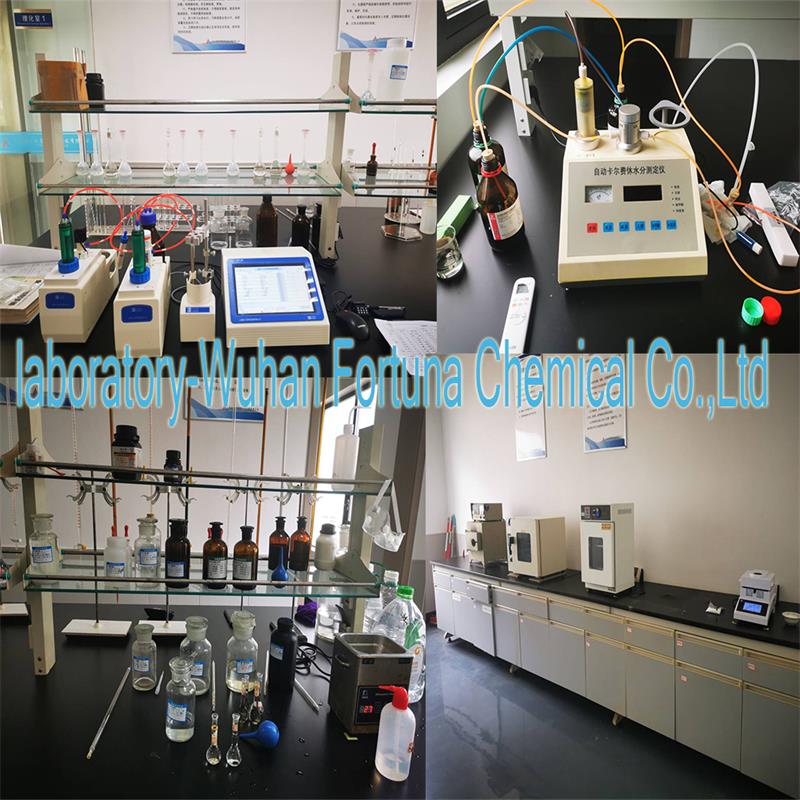



Fortunachem Provides Not Only Professional Chemical Products But Also Professional Help
Keeping you up-to-date with all the latest information, news, and events about Fortunachem!



Quick Links
Add:
E-mail:
 中文
中文
tetraacetic_acid主图.jpg "China Supplier Best Price High Quality Ethylenebis(oxyethylenenitrilo)Tetraacetic Acid CAS 67-42-5")