 English
  Español
  français
  العربية
 Search
Search
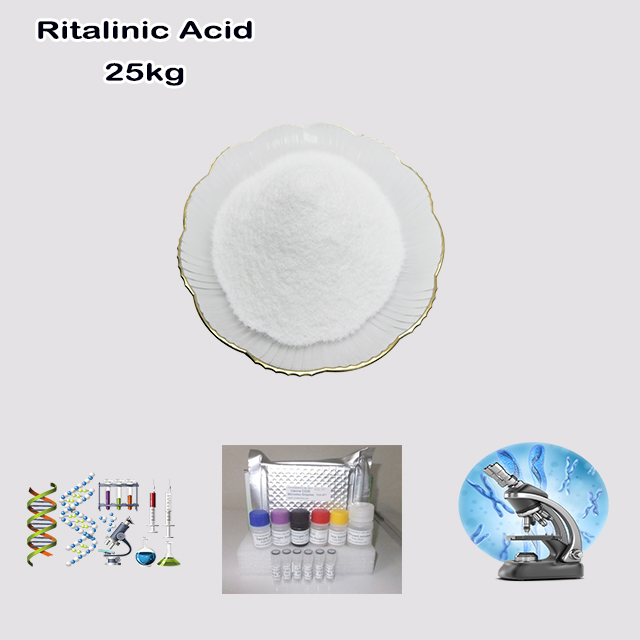
Ritalinic acid is the inactive breakdown product of the ADHD medication methylphenidate (Ritalin®). It has no stimulant or therapeutic effects itself.
Its sole importance lies in drug testing. As the primary metabolite, it serves as the key marker in urine tests to detect methylphenidate use, with a longer detection window than the active drug. It is also studied in pharmacokinetics to understand how individuals metabolize the medication.
In summary, you cannot use it; it is what your body makes after using the prescription drug. Its only practical "use" is for forensic and medical detection purposes.
Items | Specifications | Results |
Appearance | White to off-white free flowing powder,free from visible contamination | White free flowing powder,free from visible contamination |
Identification(IR) | Conforms to reference spectrum | Conforms |
Specific rotation | -0.1°~+0.1° | 0° |
Loss On Drying | ≤0.5% | 0.26% |
Residue in Ignition | ≤0.5% | 0.04% |
Heavy metal | ≤20ppm | Conforms |
Chromatographic Purity | ≥99.0% | 99.87% |
Threo α-piperidylphenylacetamide | ≤0.5% | ND |
Erythro-Ritalinic acid | ≤0.1% | ND |
Unspecified Impurities | ≤0.10% | 0.04% |
Total Impurities | ≤1.0% | 0.13% |
Conclusion | The product conforms to the above specifications. | |
Ritalinic Acid is the primary, inactive metabolite of the stimulant drug methylphenidate (commonly known by the brand name Ritalin®).
Here's a breakdown of what it is and its relevance:
Origin: When a person takes methylphenidate (for ADHD or narcolepsy), the body's liver enzymes rapidly break it down.
Process: This breakdown (hydrolysis) removes the methyl ester from the methylphenidate molecule, producing ritalinic acid.
Key Point: Unlike its parent compound, ritalinic acid has little to no stimulant effect on the central nervous system. It is considered pharmacologically inactive.
Ritalinic acid itself is not a medication and has no direct therapeutic use. However, it is critically important for two main reasons:
1. Drug Testing and Detection:
This is its most significant practical application. Ritalinic acid is the primary marker used in urine drug tests to determine if someone has taken methylphenidate.
It has a much longer detection window (typically 1-2 days) in urine than the active parent drug, making it the ideal target for testing.
2. Pharmacokinetic Research:
Studying the levels of ritalinic acid in the blood or urine helps researchers and doctors understand how an individual metabolizes methylphenidate.
The ratio and speed of conversion from methylphenidate to ritalinic acid can influence the drug's duration and effectiveness, which is relevant for optimizing ADHD treatment.
Methylphenidate (Ritalin®): The active prescription drug used to treat ADHD and narcolepsy. It works by increasing dopamine and norepinephrine in the brain to improve focus and attention.
Ritalinic Acid: The inactive breakdown product that the body creates and excretes.
Ritalinic acid is not a drug you would ever be prescribed. It is the inert result of the body processing the ADHD medication methylphenidate. Its sole "use" is as a diagnostic and forensic tool for detecting the use of methylphenidate in medical, employment, or legal settings.
Disclaimer: This information is for educational purposes. Methylphenidate is a controlled substance available only by prescription.

Fortunachem Provides Not Only Professional Chemical Products But Also Professional Help
Keeping you up-to-date with all the latest information, news, and events about Fortunachem!



Quick Links
Add:
E-mail:
 中文
中文