 English
  Español
  français
  العربية
 Search
Search
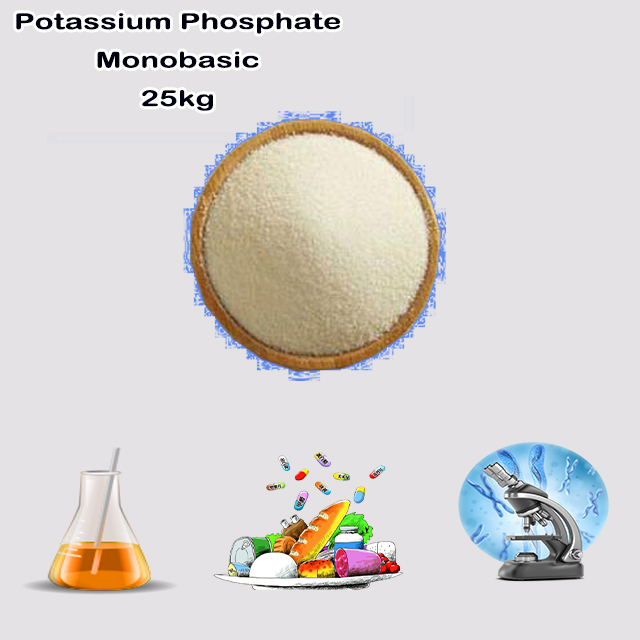

Potassium dihydrogen phosphate (MKP) CAS 7778-77-0 is used in the food industry as a leavening agent, flavoring agent, fermentation aid, nutritional enhancer, etc.
Potassium dihydrogen phosphate CAS 7778-77-0 has the effect of improving the complex metal ions, pH value, and ion strength of food, thereby improving the bonding force and water holding capacity of food.
| Items | Specifications | Results |
| Appearance | White crystalline powder | Conforms |
| Assay | ≥99% | 99.32% |
| Product parameters | |
| Cas number: | 7778-77-0 |
| Appearance: | White crystalline powder |
| Purity: | 99%min |
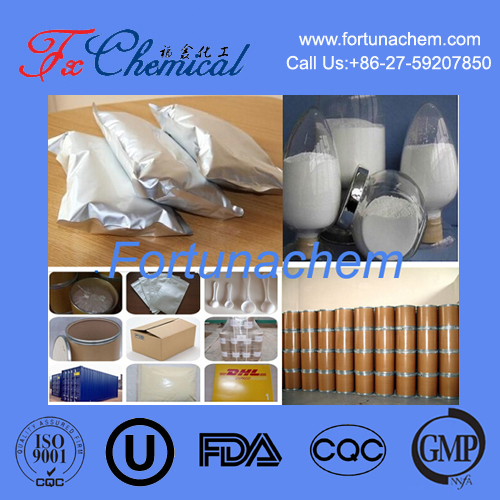
| Package details: | 25kg/bag or 50kg/bag |
| Brand: | Fortunachem |
Potassium Phosphate Monobasic is an inorganic salt with the chemical formula KH₂PO₄. It is also commonly known as:
Monopotassium Phosphate (MKP)
Potassium Dihydrogen Phosphate
It is the monopotassium salt of phosphoric acid (H₃PO₄). In solution, it dissociates to provide potassium ions (K⁺) and dihydrogen phosphate ions (H₂PO₄⁻), making it a source of two essential nutrients: phosphorus and potassium.
Appearance: White, crystalline, odorless powder or granules.
Solubility: Highly soluble in water, forming a mildly acidic solution (pH around 4.5 for a 1% solution).
Hygroscopic: It can absorb moisture from the air if not stored properly.
Buffering Capacity: It is an excellent component of buffer solutions, particularly in the biologically crucial pH range of 4.5 to 6.5, often paired with its dibasic counterpart (K₂HPO₄).
Due to its solubility and ionic content, it has vital roles in agriculture, food science, medicine, and industry.
It is a highly efficient and premium water-soluble fertilizer.
High-Value Fertilizer: Provides both phosphorus (P) and potassium (K) in a form readily available for plant uptake. It is a key ingredient in many hydroponic nutrient solutions and foliar sprays.
Low Salt Index: Unlike some fertilizers, it has a low salt index, meaning it's less likely to burn plant roots or seedlings.
Promotes Root Development, Flowering & Fruit Set: Phosphorus is critical for energy transfer and root growth, while potassium regulates water balance and improves fruit quality.
As a food additive, it is designated as E340(i).
Acid Regulator & Buffer: Controls and stabilizes pH in processed foods and beverages.
Emulsifying Agent & Stabilizer: Helps prevent separation in processed cheeses, milk products, and meat products.
Chelating Agent: Binds to metal ions, preventing oxidation and rancidity, which helps preserve color and flavor.
Gelling Agent & Moisture Binder: Used in jellies, instant puddings, and cured meats to improve texture and retain moisture.
Yeast Food: Provides minerals for yeast in bread making.
Electrolyte Replenisher: Used in intravenous (IV) solutions and oral supplements to correct or prevent low levels of potassium and phosphorus in the blood (hypokalemia and hypophosphatemia), often seen in malnutrition or critical care.
Urinary Acidifier: Historically used to acidify urine, which can help prevent certain types of kidney stones.
Pharmaceutical Buffer: A critical component in buffering systems for parenteral (injectable) medications, ophthalmic solutions, and biological reagents to maintain a stable, non-toxic pH.
Buffer Solution Component: Essential in molecular biology, biochemistry, and analytical chemistry for maintaining precise pH during experiments (e.g., PCR buffers, electrophoresis).
Nutrient Source: Used in microbial fermentation processes to grow bacteria, yeast, and other microorganisms for biotechnology and food production.
Flux: Used in metallurgy and soldering.
Water Treatment: Can be used for corrosion inhibition and metal sequestration in water systems.
Generally Recognized as Safe (GRAS): Approved for use in food and pharmaceuticals at specified levels.
Toxicity: Excessive intake, particularly through medical IV administration, can lead to hyperkalemia (dangerously high blood potassium) and hyperphosphatemia, which can cause cardiac arrhythmias, muscle weakness, and calcification of soft tissues.
Handling: As a fine powder, avoid inhalation. Use with adequate ventilation. It can be mildly irritating to eyes and skin.
Environmental: While a nutrient, direct release into waterways can contribute to eutrophication (algal blooms).
| Compound | Formula | Common Name | Solution pH | Primary Use Emphasis |
|---|---|---|---|---|
| Potassium Phosphate, Monobasic | KH₂PO₄ | Monopotassium Phosphate (MKP) | Acidic (~4.5) | Fertilizer, food acidifier, buffer component. |
| Potassium Phosphate, Dibasic | K₂HPO₄ | Dipotassium Phosphate (DKP) | Alkaline (~8.5) | Food emulsifier, buffer component (paired with monobasic). |
| Potassium Phosphate, Tribasic | K₃PO₄ | Tripotassium Phosphate (TKP) | Strongly Alkaline | Heavy-duty cleaner, industrial water treatment. |
Potassium Phosphate Monobasic (Monopotassium Phosphate) is a versatile, water-soluble salt that serves as a critical source of phosphorus and potassium. Its largest application is as a high-efficiency fertilizer in agriculture. In the food industry, it acts as a multi-functional acid regulator, buffer, and stabilizer (E340i). In medicine, it is a life-saving electrolyte replenisher in IV formulations. Its reliable buffering capacity also makes it a staple in scientific laboratories. As with all concentrated salts, its medical and industrial use requires careful control of dosage and concentration.
Disclaimer: This information is for educational purposes only. In food and pharmaceutical applications, it is used under strict regulatory guidelines. Self-supplementation with potassium or phosphate salts can be dangerous; always consult a healthcare professional.
Used as a food additive.

Fortunachem Provides Not Only Professional Chemical Products But Also Professional Help
Keeping you up-to-date with all the latest information, news, and events about Fortunachem!

Quick Links
Add:
E-mail: