 English
  Español
  français
  العربية
 Search
Search
-4-(1,3-Dioxoisoindolin-2-yl)-2-hydroxybutanoic_acid主图.jpg "China Manufacturer Supply High Quality (2S)-4-(1,3-Dioxoisoindolin-2-yl)-2-hydroxybutanoic acid CAS 48172-10-7 wholesale")
6-Benzylaminopurine (6-BA) and (2S)-4-(1,3-Dioxoisoindolin-2-yl)-2-hydroxybutanoic acid, they serve vastly different masters.
6-BA is a workhorse agrochemical. As a synthetic cytokinin, it directly manipulates plant physiology—boosting fruit size, multiplying shoots in labs, and keeping greens fresh. It’s used on a large scale in orchards and tissue culture.
The second compound is a specialist's tool in a chemist's lab. This chiral building block, with its protected amine group, is designed for one purpose: to enable the precise, multi-step synthesis of complex molecules like pharmaceuticals and peptides. Its "use" is in the construction process itself.
In short, 6-BA acts on living plants to alter growth, while the aspartic acid derivative is a molecular Lego® piece used to build new drugs and materials. One is applied in fields, the other on a lab bench.
Items | Specifications | Results |
Appearance | White or off-white crystalline powder | White crystalline powder |
Identification | Conform | Conform |
Assay | 96.0~102.0% | 100.00% |
Related substances | Phthalic acid ≤1.0% | 0.005% |
Phthalimide ≤1.0% | 0.001% | |
Phba Dmiers ≤1.0% | 0.17% | |
3-Phthalimidopropionic acid ≤0.5% | 0.09% | |
Most other single impurity ≤0.3% | 0.04% | |
Total impurities ≤2.5% | 0.36% | |
Meltine point | 154~159℃ | 155.3-156.6℃ |
Specific rotation[a]D20(C=2,NaOH) | -8.5°~-12.0° | -10.30° |
Loss on drying | ≤0.5% | 0.31% |
Conclusion | The product conforms to the above specifications. | |
This is a specialized synthetic organic compound used primarily as a chemical intermediate or building block in organic synthesis, particularly in pharmaceutical and peptide chemistry. Its structure and name contain several important functional groups that dictate its use.
Let's decode the IUPAC name to understand the molecule:
(2S)- : Indicates the stereochemistry at carbon #2. This means the molecule is chiral (non-superimposable on its mirror image) and this specific form is the S-enantiomer. This is crucial in drug synthesis where only one enantiomer is often biologically active.
4-(1,3-Dioxoisoindolin-2-yl)- : This is a phthalimide protecting group attached at the 4th carbon.
"Isoindoline-1,3-dione" is the systematic name for phthalimide.
The nitrogen of the phthalimide is connected to the butanoic acid chain. This group is used to protect a primary amine (-NH₂) during chemical reactions.
2-hydroxy- : There is a hydroxyl group (-OH) at carbon #2.
butanoic acid : The core is a 4-carbon chain with a carboxylic acid (-COOH) at the end.
In essence, this molecule can be thought of as a derivative of the amino acid aspartic acid or homoserine, where:
The amine group (-NH₂) has been protected as a phthalimide.
The side chain has been modified to include an extra methylene (CH₂) group, making it a 4-carbon chain.
Unlike 6-Benzylaminopurine, this compound has no direct agricultural or commercial uses. Its value is entirely in chemical synthesis.
This is its most significant application. The molecule serves as a precursor or building block for more complex structures, especially those containing gamma-hydroxy amino acids or unnatural amino acids.
Amine Protection: The phthalimide group masks a primary amine. After the desired reactions are performed on other parts of the molecule, the phthalimide can be cleanly removed (e.g., with hydrazine, NH₂NH₂) to reveal the free -NH₂ group. This is a standard strategy in multi-step synthesis.
Chiral Pool Starting Material: The defined (2S) stereochemistry provides a "chiral handle," allowing chemists to construct complex, stereochemically pure molecules without racemization (loss of chirality). This is vital for creating active pharmaceutical ingredients (APIs).
Compounds with a 2-hydroxybutanoic acid (or related) scaffold are found in various natural products and drugs. This specific intermediate could be used in the synthesis of:
Protease Inhibitors: Enzymes that break down proteins; inhibitors are used in drugs for HIV, hypertension, and more.
Gamma-Hydroxy Amino Acids: Components of certain peptides and natural toxins with biological activity.
Linkers for Conjugates: The carboxylic acid and (future) amine groups make it a potential linker for connecting different molecules (e.g., in antibody-drug conjugates or prodrugs).
Medicinal chemists use such building blocks to create libraries of novel compounds for screening against disease targets (e.g., cancer, infectious diseases). It allows for the systematic exploration of structure-activity relationships (SAR).
This compound does not have a biological "mechanism of action" like a hormone or drug. Instead, its chemical reactivity defines its role:
Carboxylic Acid (-COOH): Can form esters, amides, or be reduced.
Hydroxyl Group (-OH): Can be further functionalized (oxidized, acylated, alkylated) or used to influence stereochemistry.
Protected Amine (Phthalimide): Is inert to many reaction conditions but can be deprotected later to give a nucleophilic amine.
As a fine chemical intermediate, it is handled only in laboratory or industrial settings by trained personnel.
Specific safety data (toxicity, irritation) would be found on its Material Safety Data Sheet (MSDS/SDS). Phthalimide derivatives can be potential sensitizers.
It is not a consumer product and has no environmental or food use.
(2S)-4-(1,3-Dioxoisoindolin-2-yl)-2-hydroxybutanoic acid is a chiral synthetic building block. Its core utility lies in its protected amine and defined stereochemistry, making it a valuable tool for chemists constructing:
Complex peptides containing unnatural amino acids.
Pharmaceutical candidates where precise 3D structure is essential for activity.
Specialized organic molecules for research.
Key Difference from 6-BA: While 6-BA is a bulk agrochemical with direct physiological effects on plants, this compound is a high-value, small-scale laboratory reagent used to build molecules, not to apply them directly.
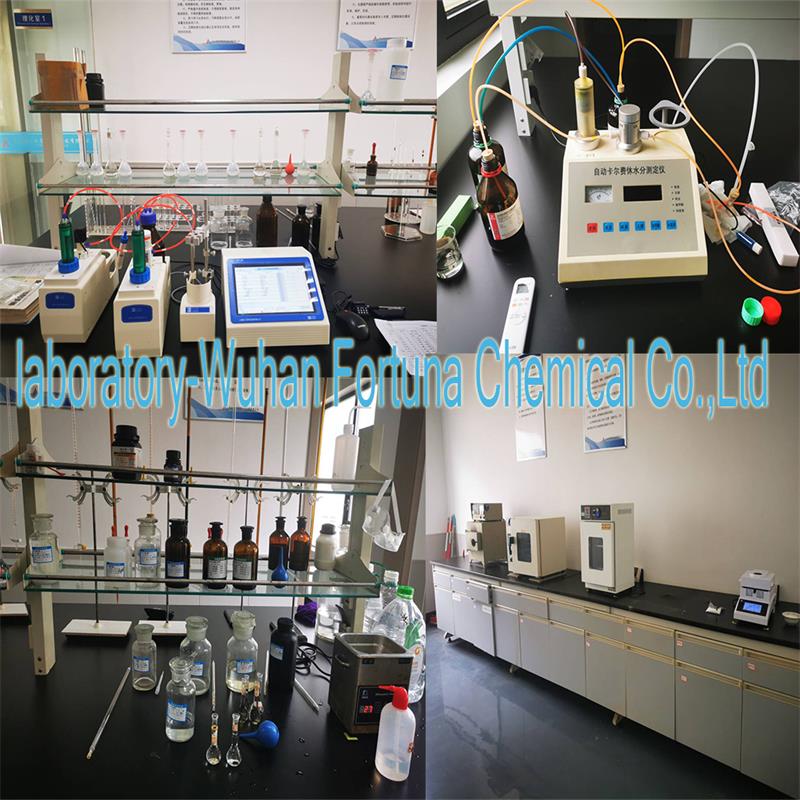
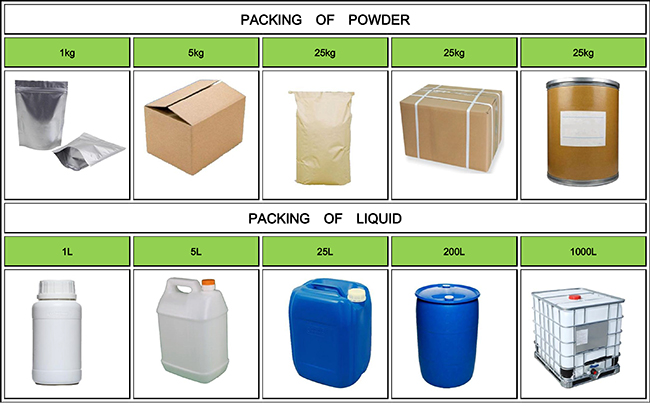

Fortunachem Provides Not Only Professional Chemical Products But Also Professional Help
Keeping you up-to-date with all the latest information, news, and events about Fortunachem!


Quick Links
Add:
E-mail:
 中文
中文
-1H-benzimidazol-5-amine主图.jpg "China Suppliers High Quality 100% 2-(4-Aminophenyl)-1H-benzimidazol-5-amine CAS 7621-86-5")