 English
  Español
  français
  العربية
 Search
Search
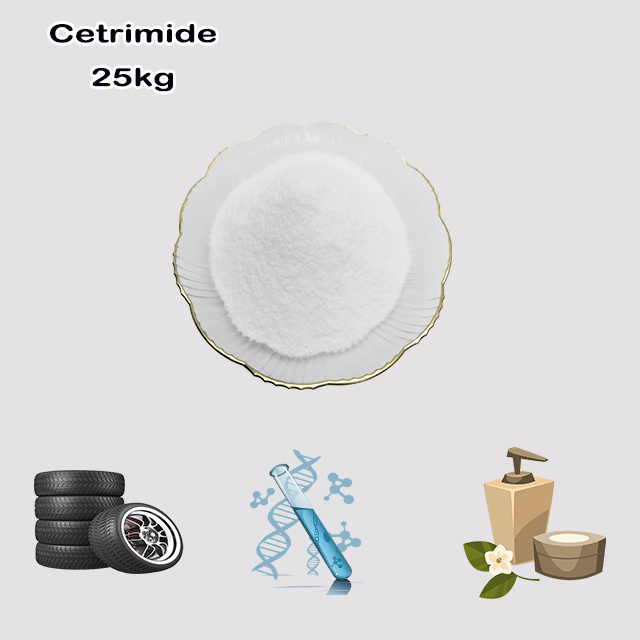
Cetrimide has excellent permeation, softening, emulsification, antistatic, biodegradable and bactericidal properties.
| Items | Specifications | Results |
| Appearance | White to almost white powder | White powder |
| Color | ≤100 Hazen | 24 |
| Moisture | ≤0.8% | 0.32% |
| Content | ≥99.0% | 99.31% |
| Product parameters | |
| Cas number: | 8044-71-1 |
| Appearance: | White to almost white powder |
| Purity: | 99%min |
| Package details: | 25kg/fiber drum |
| Brand: | Fortunachem |
Chemical Structure: A cationic surfactant with a long hydrocarbon chain (cetyl group, C₁₆H₃₃) and a positively charged quaternary ammonium head (trimethylammonium, (CH₃)₃N⁺) paired with a bromide anion (Br⁻).
Physical Traits: Typically a white, crystalline powder or colorless crystals; soluble in water (forming foamy solutions) and alcohol, but insoluble in non-polar solvents.
Surfactant Class: Cationic (positively charged), which distinguishes it from anionic (e.g., sodium lauryl sulfate) or non-ionic surfactants.
Antimicrobial Activity: The positively charged ammonium head binds to the negatively charged cell membranes of bacteria, fungi, and some viruses. This disrupts membrane integrity (causing leakage of cellular contents) and denatures proteins, leading to microbial death. It is bactericidal (kills bacteria) against most gram-positive bacteria (e.g., Staphylococcus aureus) and some gram-negative bacteria (e.g., E. coli), as well as fungicidal (kills fungi like Candida).
Surfactant/Emulsifying Action: Its long hydrocarbon chain reduces surface tension, allowing it to act as a detergent, emulsifier, or foaming agent. This helps dissolve oils, dirt, or organic matter, enhancing cleaning and penetration of the antimicrobial component.
Topical Antiseptics: Found in creams, ointments, lotions, or aqueous solutions for cleaning and disinfecting skin wounds (e.g., cuts, burns, abrasions), preventing bacterial infection.
Mucosal Disinfection: Diluted solutions are used for irrigation of the urinary tract (post-surgery) or as a gargle for oral hygiene (e.g., treating gingivitis or mouth ulcers—note: must be diluted to avoid tissue irritation).
Instrument Disinfection: Used to clean non-invasive medical devices (e.g., thermometers, scalpels) due to its ability to kill microbes and remove organic residues.
Shampoos (especially anti-dandruff formulations, as it targets fungi like Malassezia).
Conditioners, body washes, and facial cleansers (as a mild surfactant and preservative).
Oral care products (mouthwashes, toothpastes) for antimicrobial protection.
Laboratory settings: Used as a reagent for DNA extraction (CTAB method, which precipitates polysaccharides and proteins to purify DNA).
Textile and paper industries: As a softener, antistatic agent, or preservative.
Skin Irritation: Undiluted or concentrated solutions may cause redness, itching, or contact dermatitis (especially in sensitive individuals). Always use as directed (e.g., diluted for topical use).
Mucosal Irritation: Contact with eyes, nose, or throat can cause burning, stinging, or inflammation. Avoid eye contact; rinse thoroughly with water if exposure occurs.
Toxicity: Ingestion (e.g., swallowing concentrated solutions) can cause nausea, vomiting, abdominal pain, and even severe systemic effects (e.g., neurological or cardiovascular issues). Keep out of reach of children.
Drug Interactions: Avoid mixing with anionic surfactants (e.g., most household soaps) or acids—this reduces its antimicrobial activity and may cause precipitation.
Environmental Impact: Cationic surfactants can be toxic to aquatic organisms; dispose of waste solutions properly.
Synonyms: Cetyltrimethylammonium bromide (CTAB), Trimethylcetylammonium bromide, Cetavlon® (a common brand name).
Typical Concentrations:
Topical antiseptics: 0.1–1% (often combined with other agents like chlorhexidine for synergistic effect).
Laboratory use: 1–2% solutions for DNA extraction.
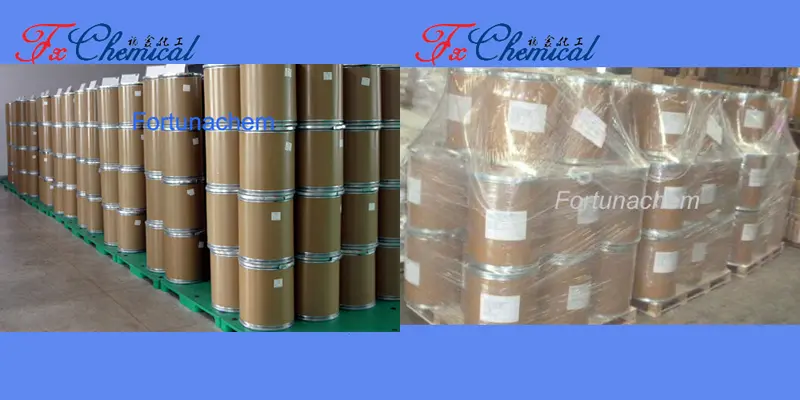
This product is natural, synthetic rubber, silicone oil and asphalt emulsifier; antistatic agent and softener for synthetic fiber, natural fiber and glass fiber; conditioner for hair conditioner; phase transfer catalyst; emulsion foaming agent, surfactant, Analytical reagent, it is also used as a surface active agent in the production of flux and solder paste. It has strong activity and has a certain effect on bright spots, virtual soldering, and full soldering.


Fortunachem Provides Not Only Professional Chemical Products But Also Professional Help
Keeping you up-to-date with all the latest information, news, and events about Fortunachem!

Quick Links
Add:
E-mail: