 English
  Español
  français
  العربية
 Search
Search
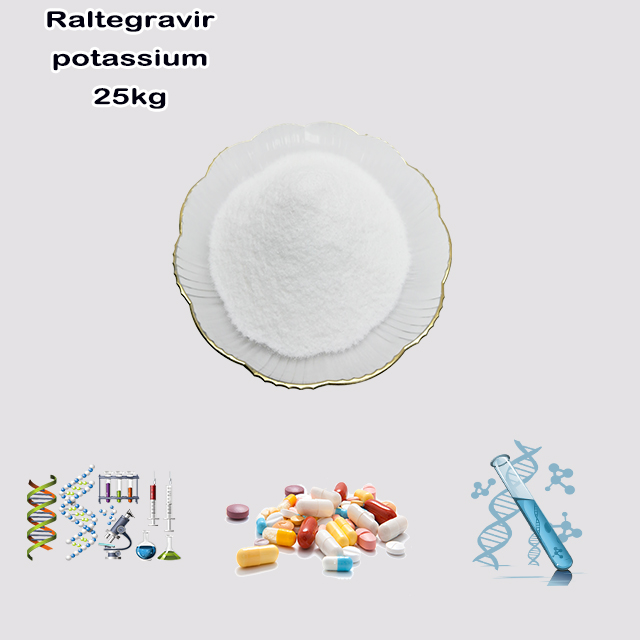



Raltegravir potassium is used to treat human immunodeficiency virus infections.
| Item | Specification | Result |
| Appearance | White crystalline powder | Conforms |
| Assay | ≥99.0% | 99.5% |
| Product parameters | |
| Cas number: | 871038-72-1 |
| Appearance: | White to crystalline powder |
| Purity: | 99.0%min |
| Package details: | 10g/bag,100g/bag,500g/bag,1kg/bag |
| Brand: | Fortunachem |
Raltegravir Potassium is the active pharmaceutical ingredient in the brand-name drug Isentress®. It is an antiretroviral medication used primarily in the treatment of HIV-1 infection.
Unlike the previous excipients we discussed (Cremophor EL, Croscarmellose Sodium), Raltegravir Potassium is the active drug itself.
This is its most critical defining feature. Raltegravir belongs to a specific and important class of HIV drugs called Integrase Inhibitors.
To understand how it works, let's briefly review the HIV lifecycle:
HIV enters a human CD4 cell (a type of immune cell).
The virus's RNA is converted into DNA.
A key step: The viral enzyme integrase inserts this viral DNA into the DNA of the human cell.
Once integrated, the human cell's machinery is hijacked to produce new copies of the virus.
Raltegravir's Mechanism of Action:
Raltegravir specifically blocks the integrase enzyme in step 3. By doing so, it prevents the HIV DNA from becoming a permanent part of the human cell's genetic material. This halts the replication process of the virus at a critical early stage.
Raltegravir is never used alone. It is a cornerstone component of combination antiretroviral therapy (cART), also known as highly active antiretroviral therapy (HAART). The standard of care is to use at least three drugs from two different classes to prevent the virus from developing resistance.
Key clinical uses include:
Treatment of HIV-1 Infection in Adults and Children:
It is used in combination with other antiretroviral agents as a first-line or subsequent treatment regimen.
Post-Exposure Prophylaxis (PEP):
It is used to prevent HIV infection in individuals who have had a recent potential exposure (e.g., a needlestick injury for healthcare workers or sexual exposure).
A Key Historical Milestone:
Raltegravir was the first integrase inhibitor approved by the U.S. FDA (in 2007). Its approval was a major advancement in HIV therapy, offering a potent, well-tolerated option with a new mechanism of action for patients who had developed resistance to other drug classes.
Raltegravir Potassium is available in several forms to suit different patient needs:
Film-coated Tablets: The original formulation (400mg), taken twice daily.
Chewable Tablets: For pediatric patients or those who have difficulty swallowing, available in 25mg and 100mg strengths. These contain phenylalanine.
Oral Powder for Suspension: For very young children.
600mg Extended-Release Tablets: A later formulation that allows for once-daily dosing in certain patients who are already virologically suppressed.
Generally Well-Tolerated: Compared to many older HIV drugs, Raltegravir is known for having a favorable side effect profile.
Common Side Effects: These can include diarrhea, nausea, headache, fever, and fatigue.
Serious but Less Common Side Effects:
Severe Skin and Allergic Reactions: Including Stevens-Johnson syndrome and toxic epidermal necrolysis. Patients are advised to seek immediate medical attention for any developing rash.
Muscle Problems (Myopathy and Rhabdomyolysis): Unexplained muscle pain, tenderness, or weakness should be reported to a doctor.
Changes in Liver Function: Liver monitoring is typically performed.
Immune Reconstitution Inflammatory Syndrome (IRIS): As the immune system recovers, it may cause inflammation in response to pre-existing opportunistic infections.
Drug Interactions: Raltegravir has a relatively low potential for drug interactions, which is an advantage. However, strong inducers of the drug-metabolizing enzyme UGT1A1 (e.g., rifampin) can significantly lower Raltegravir levels, requiring dose adjustment.
Identity: An antiretroviral drug and the first-in-class Integrase Strand Transfer Inhibitor (INSTI).
Brand Name: Marketed as Isentress®.
Mechanism: Blocks the HIV integrase enzyme, preventing the virus from integrating its DNA into human CD4 cells.
Use: A key component of combination therapy for HIV-1 infection in both adults and children, and for post-exposure prophylaxis (PEP).
Dosing: Available in twice-daily and once-daily formulations.
Disclaimer: This information is for educational purposes only. The management of HIV is complex and must be directed by a specialist healthcare provider. This is not medical advice.




MF:C20H20FN6O5K
MW:482.511
EINECS No.: 682-461-3


Fortunachem Provides Not Only Professional Chemical Products But Also Professional Help
Keeping you up-to-date with all the latest information, news, and events about Fortunachem!

Quick Links
Add:
E-mail: